
The 8 Greatest Fantasy Movie Masterpieces of the 1960s
The 1960s were one of the most turbulent times in film history. All around the world, filmmakers were trying bolder, more experimental projects, leading to an increase in special effects and more creative stories. In America, the much-hated Hays Code that had dictated what was and was not acceptable for cinema was finally done away with, leading to a more balanced rating system that is still used today, and more nuanced characters who weren’t constricted by rigid puritan morality.
The fantasy genre saw some success during the 1960s, though admittedly not as much as in decades before or after. There were still a fair few movies that took advantage of the advancements in technology, and while most of them are not going to rank among the genre’s best, the ones that do offer fun, inventive stories that are sure to entertain.
‘Jack the Giant Killer’ (1962)

Princess Elaine (Judi Meredith) of Cornwall is nearly kidnapped by a giant sent by the evil sorcerer Pendragon (Torin Thatcher). A brave farmer named Jack (Kerwin Mathews) kills the giant, and as a reward, the King makes him Elaine’s bodyguard and tasks him with taking her to a safe location away from Pendragon’s gaze. Unfortunately, the sorcerer intercepts them and takes the princess, so Jack and some new allies must brave his monster-infested island to rescue her, lest Pendragon use the princess to force her father to abdicate the throne.
Jack the Giant Killer takes heavy inspiration from The 7th Voyage of Sinbad, including the use of stop-motion effects for the creatures, and casting Matthews and Thatcher as the hero and villain, respectively. That said, it’s far from a knockoff, focusing on European mythology instead of Arabian. The result is still a fun adventure with some memorable creature designs, even if the stop-motion can’t hold a candle to Ray Harryhausen‘s techniques.
‘The Fabulous Baron Munchausen’ (1962)

Image via Ústrední Pujcovna Filmu
An astronaut named Tonik (Rudolf Jelínek) travels to the moon and arrives at a dinner party attended by various fictional characters. Among them is Baron Munchausen (Miloš Kopecký). Believing Tonik to be someone native to the moon, the Baron offers to take him back to Earth. However, instead of arriving in the present day, they are transported back to the 18th century, and must contend with the Sultan of the Ottoman Empire, massive sea creatures, warring nations, and everything in between.
The Fabulous Baron Munchausen is one of the most visually enthralling adaptations of the book of the same name by Rudolf Erich Raspe. The film makes great use of stylistic animation and lighting tricks to create a one-of-a-kind viewing experience that mimics the sensations of a lucid dream and a storybook come to life. This approach is the result of the film being part of the Czechoslovak New Wave, in which Czech and Slovak filmmakers could try experimenting with new styles.
‘Chitty Chitty Bang Bang’ (1968)

When siblings Jemima (Heather Ripley) and Jeremy Potts (Adrian Hall) find a damaged racecar, they ask their inventor father, Caractacus (Dick Van Dyke), to help save it from being scrapped. After a series of misadventures to sell some of his inventions, he raises the money and fixes up the car, naming it Chitty Chitty Bang Bang due to its funny engine sound. Joined by the lovely Truly Scrumptious (Sally Ann Howes), Caractacus tells the kids a fantastical story about Baron Bomburst of Vulgaria’s (Gert Fröbe) attempts to steal the car, which then seems to bleed into real life.
Chitty Chitty Bang Bang is based on the book of the same name by Ian Fleming, and famed children’s author Roald Dahl co-wrote the screenplay, so you know it’s going to be a fun time for family audiences. The film is a bright, colorful affair with memorable characters brought to life by its powerhouse cast, and is full of catchy songs by none other than the iconic Sherman Brothers. At the same time, it also has one of the most memorable and vile villains in any family film, the Child Catcher (Sir Robert Helpmann), who takes way too much delight in his job.
‘The Sword in the Stone’ (1963)

While hunting with his foster brother, Kay (Norman Alden), in the woods, Arthur (Rickie Sorensen, Richard Reitherman, and Robert Reitherman) stumbles upon the home of a wizard named Merlin (Karl Swenson) and his talking owl, Archimedes (Junius Matthews). Merlin offers his services as Arthur’s tutor, and intends to educate him using his knowledge of the future and his magical powers. Meanwhile, Arthur’s foster father, Sir Ector (Sebastian Cabot), trains Kay for a joust to be held on New Year’s Day to decide the new King of England.
The Sword in the Stone was the first animated Disney film to have a single director—Wolfgang Reitherman, one of Disney’s Nine Old Men—and represented a shift at Disney that would dictate the company’s future. As for the film itself, it’s a relatively low-stakes affair that plays out through a series of educational segments that often see Arthur transformed into different animals. The third act in particular is beloved thanks to a rival sorceress to Merlin named Madam Mim (Martha Wentworth), which leads to an iconic wizard battle.
‘How the Grinch Stole Christmas’ (1966)

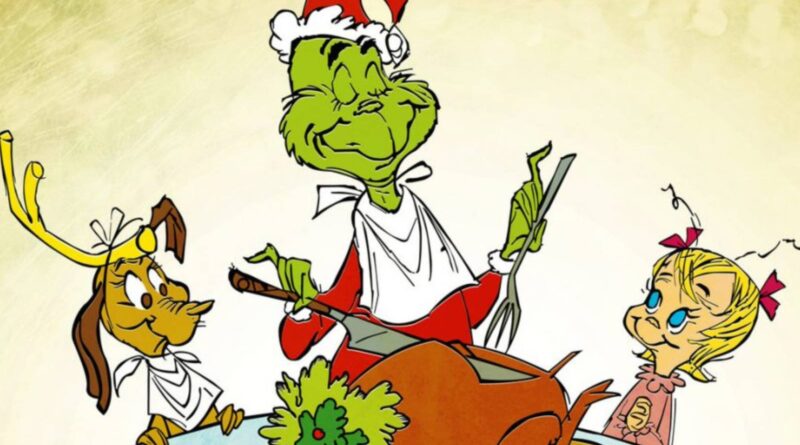
As the Who’s of Whoville prepare for Christmas, the Grinch (Boris Karloff) stares down from his cave and broods over how much he despises the holiday. He eventually settles on a dastardly plan to steal Christmas. Wearing a homemade Santa Claus costume and dressing his dog, Max (Dallas McKennon), as a Reindeer, he goes from home to home and steals all of their presents and decorations.
How the Grinch Stole Christmas has gone down as one of the most beloved and recognized Christmas Specials of all time, and manages to faithfully adapt Dr. Seuss‘ iconic story without over-bloating it. A major reason for its success is the stellar animation by Chuck Jones, known for his work on the Looney Tunes, which both captures the bright colors and warm emotions associated with the holiday season and some iconic facial expressions from the Grinch. Speaking of the Grinch, Karloff was the perfect choice to voice him, giving the green curmudgeon a soft yet commanding voice that sounds like he is in a perpetual state of suppressing some great fury built by decades of indignation.
‘Yellow Submarine’ (1968)

Below the sea is Pepperland, a magical kingdom whose citizens are united in their love of music. Unfortunately, Pepperland is invaded by the music-hating Blue Meanies (Paul Angelis), who petrify its citizens and drain the land of color. Fortunately, one man named Fred (Lance Percival) is able to escape in a Yellow Submarine, which he uses to arrive in Liverpool and recruit the help of the Beatles to save Pepperland.
Yellow Submarine is what happens when you combine the nonsensical storytelling of Alice’s Adventures in Wonderland with contagious Beatles music and 1960s psychedelia. It is a unique visual experience that encourages the viewer to come along for the ride, enjoy the music, and choose peace and love over hate and division. If nothing else, it’s a chance to see some of the craziest character designs in animation, as can best be seen through the numerous outlandish designs for the Blue Meanies.
‘Jason and the Argonauts’ (1963)

Jason (Todd Armstrong) is the sole surviving child of King Aristo, who was overthrown by Pelias (Douglas Wilmer). He unknowingly saves Pelias from drowning and loses a sandal in the process, which identifies him as the man prophesied to bring about Pelias’ downfall. Rather than immediately kill the man who saved his life, Pelias encourages the young hero to seek out the legendary Golden Fleece, hoping that he will be killed by some monster or lost in a storm.
Jason and the Argonauts is one of the most iconic films based on Greek mythology. The acting is appropriately epic as one would expect from heroes, and the stop-motion creatures by Ray Harryhausen look and feel appropriately otherworldly, both in the world yet distinctly not of it. From the gigantic bronze statue named Talos to a legion of skeletal warriors, each creature captures your attention thanks to their dynamic movements, creative designs, and how effectively they challenge the heroes.
‘Mary Poppins’ (1964)

Frustrated that his children, Jane (Karen Dotrice) and Michael (Matthew Garber), have driven off another nanny, George Banks (David Tomlinson) puts out an ad for a nanny who is no-nonsense, and rips up an ad written by the kids for one who is kinder. The next day, a strong gust of wind blows away the nannies who responded to George’s ad, and a woman named Mary Poppins (Dame Julie Andrews) descends from the clouds with the children’s ad in hand. George reluctantly hires her when Mary Poppins promises to be firm with the kids, but she also takes them on fantastical adventures with her friend, Bert (Dick Van Dyke).
Mary Poppins is Walt Disney‘s take on the beloved books by P. L. Travers, and while the film caused Travers to refuse any further American adaptations of her work, it has gone down in history as one of the best classic fantasy movies, and walked away with five Academy Awards against thirteen nominations. The film is pure, concentrated fun; the songs by the Sherman Brothers are guaranteed to lighten your mood, the characters are lovable, and the story has a strong message for parents about spending time with their children while they’re able to. Special mention must also be given to Andrews for her fantastic ability to switch between warm, friendly smiles one moment and strict, disciplinary tones the next, all while remaining dignified and polite.