
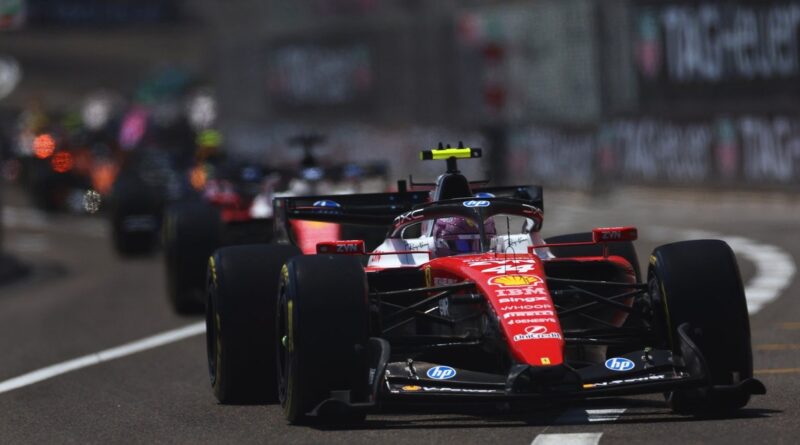
Is a Monaco F1 sprint a good idea or just mad? Our writers have their say
F1 had long planned to increase the number of sprints from the current six weekends per year because. The format allows promoters to offer their paying customers more on-track action that matters, making a sprint weekend an enticing proposition worth forking out money for. The numbers show fans also tune in more often than for meaningless practice sessions, even if the sprint format itself draws mixed review.
Has F1 taken things a step too far by applying the sprint format to Monaco’s processional racetrack? Our writers issue their verdict.
Two qualifying sessions disrupt the DNA of the Monaco weekend build-up – Ronald Vording
I have to admit that I am still not the biggest fan of the sprint format, although perhaps a slightly less fervent opponent than I was a few years ago. You get used to everything, I suppose, although if given the choice I would still prefer a traditional race weekend – also partly because of the workflow for written media at the track.
Nevertheless, the commercial benefits of sprint weekends are clear. Fridays and Saturdays are made more attractive for promoters, as those buying a ticket get more action with sessions that actually matter. Of course, F1 management says it is based on data showing how much fans love it, but everyone knows that does not tell the entire story.
A sprint in Monaco does not seem commercially necessary, but in that respect it is important to remember that a sprint weekend is not just about having two races. Logically, the format also means two qualifying sessions, and that is precisely what tipped the balance for Monaco. In that respect, next year we will get the best that Monaco has to offer twice.
Sounds good, you might say, as qualifying in Monaco always has fans on the edge of their seats. But it takes away some of the charm of the Monaco weekend. After all, the Monaco race weekend is all about the gradual build-up towards the absolute highlight, one of the finest moments of the F1 season. It is about watching the drivers get a little closer to the walls with every practice session before that one climax on Saturday afternoon.

Lewis Hamilton, Ferrari
Photo by: Erik Junius
The latter is also clear to see when walking trackside – which is unrivalled in Monaco. While drivers deliberately leave some margin during the first practice session, a day later – towards the end of FP3 – you increasingly see them searching for the limit at places such as Piscine and Tabac. It is flirting with risk, a balancing act between building confidence and wanting too much, too soon. And it is a balancing act that can go wrong – just ask Max Verstappen, who crashed during final practice in 2018 and had to miss qualifying with a potentially race-winning car.
Building up the Monaco weekend from session to session, with that one peak on Saturday, is an art for the drivers and a joy to watch. And it is precisely that dynamic that is now changing. Next year, the build-up towards regular qualifying will be completely different because of a sprint race in the morning, while it also raises the question of how much risk drivers will be willing to take, given Saturday afternoon is all-important for the outcome of the weekend.
Two qualifying sessions in Monaco will undoubtedly be spectacular, but this changes the DNA of the Monaco weekend and the way drivers build it up – and I’m not sure the purist in me necessarily needed that to change.
F1 could be braver with its sprint race format and consider reverse grids – Oleg Karpov
Making an F1 calendar is not a trivial task, and while it’s a good habit in the modern world to bash those in charge, they’re actually doing a decent job with it. Formula 1’s schedule is a good mix of historic venues – with the likes of Monza, Spa and Monaco still having their place – and unique new ones like Las Vegas and Miami, as the world championship does its best to capitalise on its growth in the United States.
Madrid was a good step too, with the idea of a street track in one of the European capitals – and it’s a shame the track itself didn’t live up to expectations. But if the local organisers really make an effort to solve the overtaking issue, that can still be a success in the future.
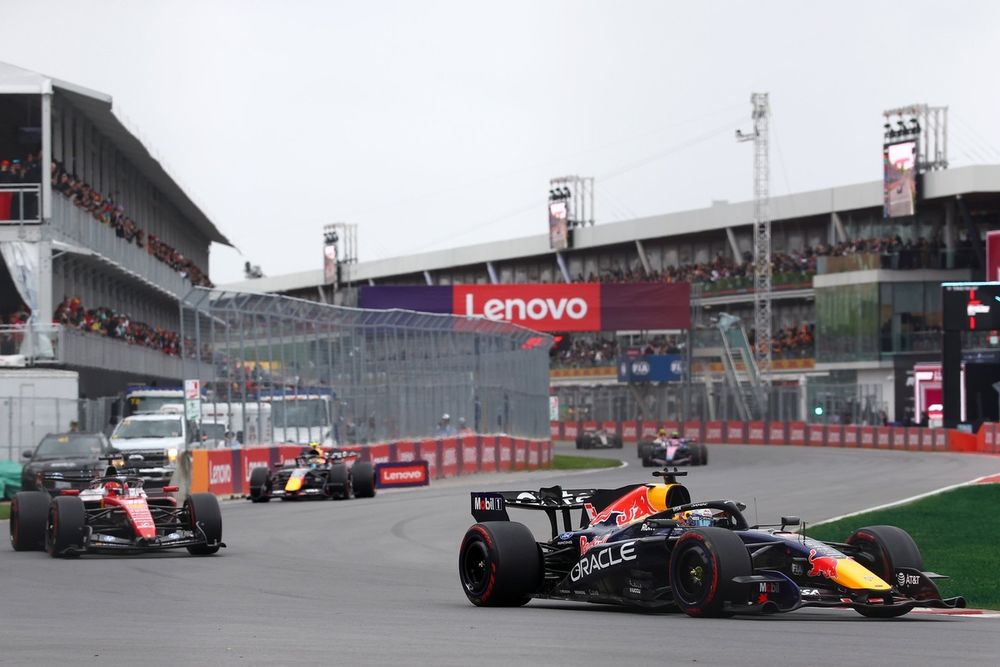
The Canadian Grand Prix will also host a sprint weekend in 2027
Photo by: Andy Hone/ LAT Images via Getty Images
Overall, the 2027 schedule is well done, and it’s also a bit pointless to moan about the number of races, which has increased compared to the not-so-distant past. But as a global entertainment business competing with other major sporting events, this step is inevitable. As, probably, is a further increase in the number of races.
While I understand that the plan must be to increase the number of sprint races even further – and potentially to make every grand prix feature one – questions remain over whether the format is right. And at least to me, it feels like F1 could be a bit braver with it, offering something different to a “mini-grand prix” which is fitted into the schedule of a larger event. Essentially, in its current state it just doesn’t offer much apart from a little preview of what we’re about to see in the main event.
That format also makes sure those who are scoring the most points get another chance to score even more, increasing the gap to the rest of the field – so why not just make that event about the smaller teams and give them an opportunity? Yes, you guessed it, I’m talking about reverse grids – and to me, it could at least be under consideration to turn the format upside down, scrapping the additional qualifying altogether and allowing the grid to be formed by the championship order – in reverse.
We’d see Cadillac and Williams drivers trying to salvage a few more points in such races, and that would surely add another intrigue: how many places can the championship leaders still gain, starting from the back?
Artificial? For sure. But having purpose-built vehicles going around circuits isn’t very natural in the first place either. That wouldn’t touch the grand prix format itself, with the biggest points still awarded for the main event, but would at least offer something different, with a completely new intrigue to it.
F1 2027 calendar just proves sprint format needs a shake-up
Some time ago I wrote a column for sister website Autosport arguing for a shake-up of the sprint race format, and seeing the 10 venues selected for a sprint in 2027 has only reinforced that idea in my head.
The long and short of it is that if you are going to offer 10 sprint races per year, it needs to have a different look than the main grand prix. Strategic variance is the main driver of on-track action and overtaking, and a short pitstop-less race offers very little of it.
Why not try a one-lap qualifying shootout on sprint weekends, and run it in championship order. That means that, as it stands, Kimi Antonelli would go out first when track conditions are not at their best, with the Aston Martins and Cadillac going out last.
It’s not as artificial as a full-blown reverse grid solution, which I am heavily opposed for sporting reasons. But it is a softer way to add jeopardy, while still allowing drivers and teams to make the difference. And the format would only be applied to the sprint grid, retaining the purity of the actual grand prix itself.

Could a one-lap qualifying format help make F1’s sprints stand out?
Photo by: Russell Batchelor / Motorsport Images
As far as Monaco goes, to me this feels like F1 is waving the white flag on the grand prix as a motor race rather than a glorified parade. It’s clear that the Monaco Grand Prix isn’t going anywhere, and that the track will also stay as it is for the long term given the logistical constraints.
The dreadful two-stop experiment of 2025 didn’t work, so it feels like F1 chiefs have just given up on making the grand prix work and are instead leaning into what Monaco does best, which is to offer two qualifying shootouts instead of one.
It’s understandable from a promotional point of view, but if we’re just accepting some of F1’s races are going to be a write-off in advance, then it feels like something is fundamentally wrong.
Is adding more sprint races a good idea? And how could F1 improve the format? Have your say below
We want your opinion!
What would you like to see on Motorsport.com?
– The Motorsport.com Team