
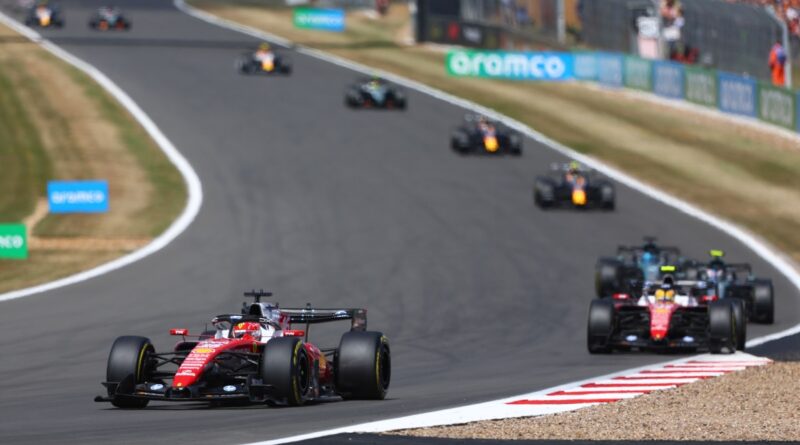
Why struggling F1 teams can’t follow Ferrari’s aggressive upgrade plan
The new regulations ushered in by Formula 1 for the 2026 season have reset the development cycle that left McLaren at the top of the pyramid, with Mercedes taking the Woking-based squad’s place.
But with the new cycle brings greater opportunity to find greater gains through upgrade packages, with the law of diminishing returns returning back to the beginning of its spectrum.
And while Mercedes was the dominant force in the early stages of the campaign, Ferrari has been aggressive with the development of its SF-26, the work back at Maranello beginning to bear fruit with victories in Spain and Great Britain for Lewis Hamilton and Charles Leclerc.
That philosophy has raised eyebrows across the paddock, not least from Mercedes team principal Toto Wolff, who has questioned whether the Scuderia would be able to remain under the championship’s budget cap while updating its package so frequently.
Ferrari counterpart Fred Vasseur was far from happy that his long-time friend had singled his squad out when speaking at Silverstone and, when asked why he thought that may be the case, the Frenchman suggested that the team’s ‘upgrades’ were being taken for more than they are in reality.
“I found it a bit weird because I think the more performance you can bring at the beginning, we are all in December, if we can bring something at the beginning we do it, and it’s better to have a couple of tenths for five races than a couple of tenths for the last two,” explained Vasseur.
“But sometimes it’s difficult to find performance, sometimes a bit less. Sometimes you can have the feeling that we are bringing a big upgrade but this is just a modification of some parts, nothing else.”
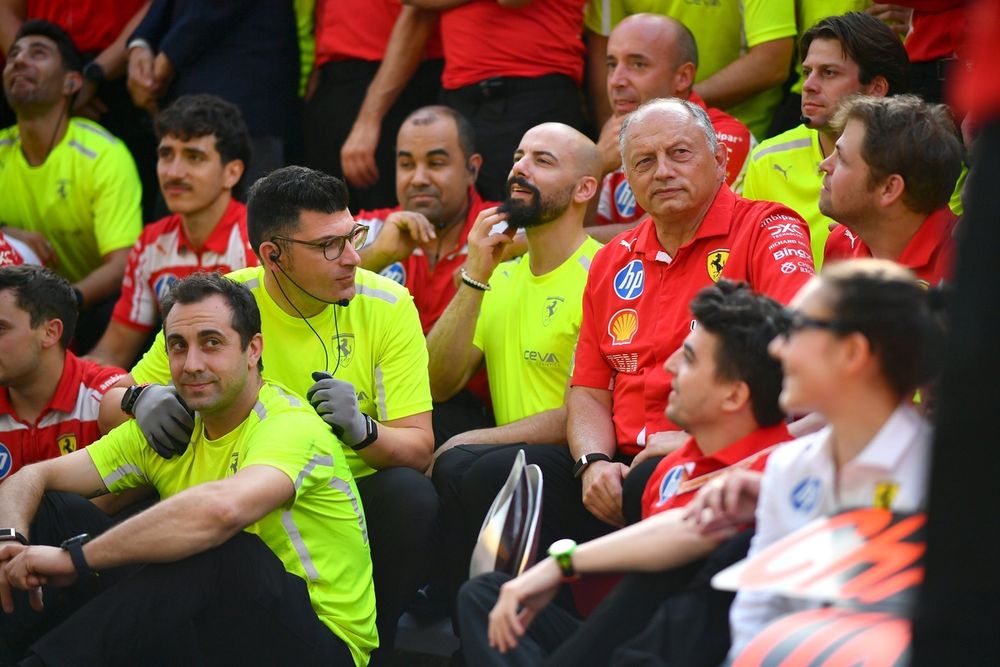
Frederic Vasseur, Ferrari
Photo by: James Sutton / LAT Images via Getty Images
While Ferrari has the firepower to be able to incrementally add to its machinery, as has Red Bull in recent races, further down the pecking order the development plan is more complicated.
Williams is one squad that has got off to a subdued start to a season once billed to be a major step forward from the midfield space it has filled. Detailing why the Grove-based outfit can’t follow Ferrari’s aggressive development strategy, team principal James Vowles explained: “Even if I had everything on time and working, our efficiency level is not at the level of a Formula 1 team that’s an established way of working for 10 years. That’s just a fact behind it.
“So they have a far more efficient set of processes behind them. Take Williams, we didn’t have an external supply network at the right level because there’s no funds to pay them fundamentally.
“Mercedes for 12 years built up a relationship to have the best suppliers and the best people in their suppliers working on their product on time with the right communication and the ways of working – basic, I know.
“But if that’s missing, in two years I’m trying to build up what happened elsewhere for 10 years with them not having necessarily the best allocation of people around it. That won’t happen overnight.
“That means there’s a loss of efficiency and it can be time or cost. You can choose whichever one of those two levers you want to pull or both of them you want to pull.

James Vowles, Williams
Photo by: Alastair Staley / LAT Images via Getty Images
“Ferrari have the same. All the top teams have the same. Our job in all of that is draw a pathway for how we get to that level or even think differently to them and get ourselves there.
“But I think fundamentally for two sides of the grid, it will cost more money and take more time in order to produce parts.”
Aston Martin has found itself right at the back of the grid after a nightmare start to the season, though it sits ahead of newcomer Cadillac by virtue of an inherited point at the controversial Monaco Grand Prix in June.
Minimal updates have been added to the AMR26 since the beginning of the campaign but a wide-ranging package is expected for the Hungarian Grand Prix ahead of the summer break.
Asked how Ferrari’s strategy could be possible and whether the Silverstone squad could replicate it with its own car, chief trackside officer Mike Krack replied: “That depends on the plan. At the end of the day, the decision was made. You will recall that we will not bring race on race on race.
“And if their plan was different, then it was different. You must just not forget one thing. If you bring an upgrade every week, you have to plan this long in advance.
“You cannot say, I was poor in Austria and I have an upgrade in Silverstone the week after.
“So, this is all following a plan that has taken a long time to do, where you factor everything in logistics, production, technicalities of the circuit and all that. So, each team has their plan and they work to their boundary conditions.”
We want your opinion!
What would you like to see on Motorsport.com?
– The Motorsport.com Team