
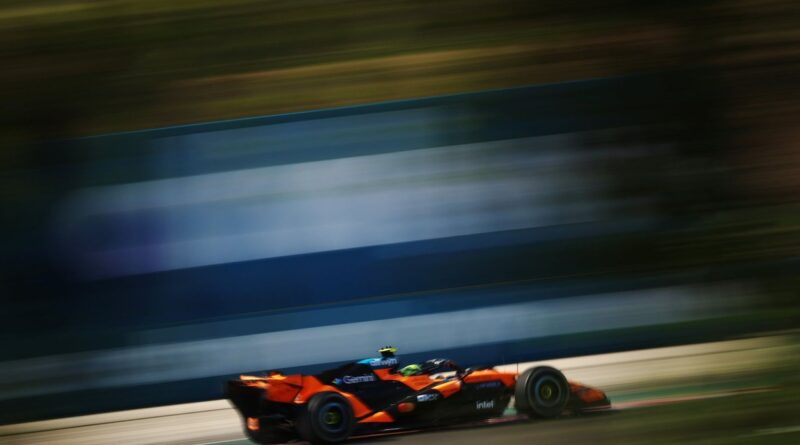
What is the F1 summer break and why does it happen every year?
Formula 1 is now in its summer recess with the series on hold between the last race in Hungary and the next grand prix in the Netherlands. But, why does the championship take a two-week break and what do teams do during the time off?
Despite the disrupted calendar due to the conflict in the Middle East, F1 has just polished off the first half of its season with a run of 11 grands prix. Now, with Mercedes leading the drivers’ and constructors’ crowns, the paddock is in the midst of its annual summer break.
There will now be no official F1 track action until the Dutch Grand Prix weekend kicks off at Zandvoort on 21 August.
During this break, each of the 11 teams on the F1 grid will get to enjoy some well-deserved time off, but they don’t completely shut up shop for the summer.
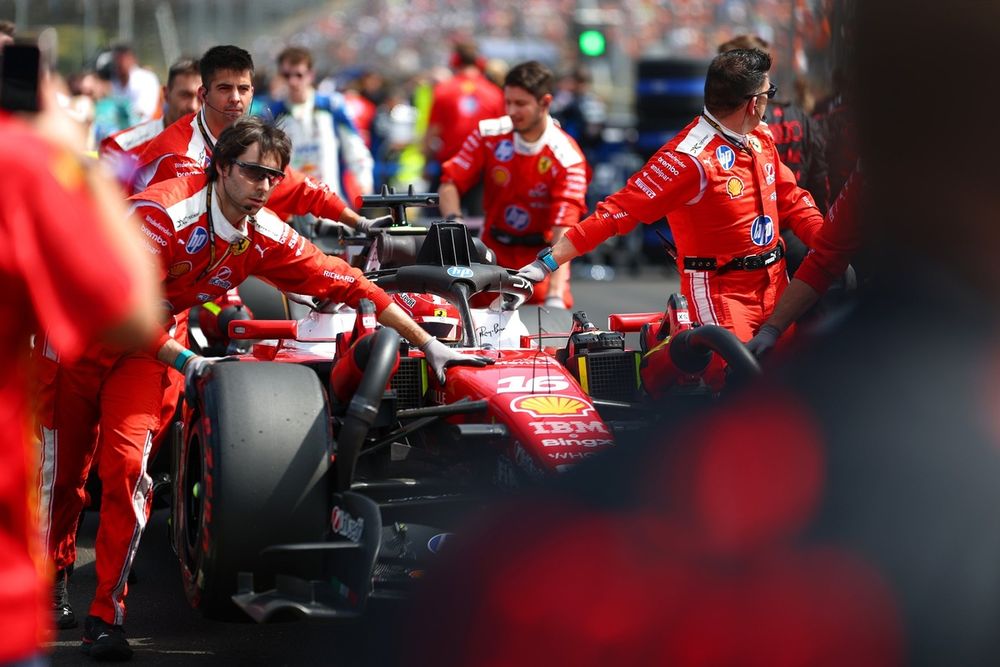
Charles Leclerc, Ferrari
Photo by: Sam Bloxham / LAT Images via Getty Images
What is F1’s summer break?
The summer break is a rarity in F1 terms, as it is one of the few regulations that everyone on the grid agrees with.
“Well, in Formula 1 it seems that almost everything is quite sensitive,” FIA single-seater director Nikolas Tombazis told Motorsport.com. “So, it’s very rare that you get 11 teams and five or six PU manufacturers saying ‘fantastic, we all agree’. The only thing I think that everybody agrees on is that the August shutdown is a good thing.
“But that’s the only thing that everybody agrees on. I think everything else [is difficult]. And even that took time for everybody to agree on. You know, when Franz Tost was still in place, he didn’t want it.”
In an overarching sense, the F1 summer break is the period between the final race in July – for 2026 this is the Hungarian GP on 24-26 July – until the first race back in late August. This year, that’s the Dutch GP on 21-23 August.
For the teams, when they have no races or official tests to attend or prepare for until the F1 summer break ends, there is also a mandatory team factory shutdown where work is severally restricted to just the basic functions to ensure the team ticks over.
This rule is implemented by Article 21.8 of the FIA F1 sporting regulations: “All competitors must observe a shutdown period of fourteen (14) consecutive days during the months of July and/or August.”
In this period teams cannot work on car design, development or parts production, including planning or hold meetings. Wind tunnels or machining parts are also not allowed to be run at any time during the 14-day period, but essential work like service and maintenance is permitted.
F1 teams can repair damaged cars but need to gain FIA permission to operate, while any tasks that are not related to the F1 team are permitted. F1 constructors are allowed to activate its 14-day shutdown period at any time within the summer break, with the majority of teams opting for a middle two weeks to provide time to unpack from the previous race and prepare for the next race after the shutdown.
But F1 teams don’t need to run the 14-day shutdown at the same time, so some teams may start or finish the period earlier than others. The summer break was still used during the COVID-19-affected 2020 season, when it was pushed forward into March and April to allow the season to start and run concurrently from July.
While the rules in the sporting regulations apply to all teams, it generally also comes into play for the FIA, race officials, suppliers, the media and other stakeholders involved in the series that ensure F1 can go racing.

Isack Hadjar, Red Bull Racing
Photo by: Guido De Bortoli / LAT Images via Getty Images
Why does F1 have a summer break?
Since the F1 calendar ballooned to more than 20 races across each season, the summer break has been implemented to ensure time off is provided, with rules set in place to stop teams exploiting it to gain a competitive advantage.
It is also a way to keep costs in check, having been installed long before the cost cap, because it means each F1 team has to pause development and research work. It also allows team personnel to spend time away from F1 and work, to relax and recover with family and friends, before the action resumes in the frantic run of races to the end of the season.
Given F1 teams are hard at work as soon as the Christmas break ends, it is the first genuine period to stop work for many departments in each squad. It also acts as a timely breather before the work ramps up again for the end of the season and then the focus switch to the following campaign.
What happens during the F1 summer break?
What happens during the summer break varies depending on each department of an F1 team, but for the vast majority all work stops during the 14 days of shutdown. This covers any area that works specifically on performance or the running of the F1 team and cars from top to bottom.
Only a few departments are permitted to keep working, which are those that don’t have a direct impact on car performance: mainly marketing, finance and legal. Outside of the mandatory 14-day shutdown period, all areas of an F1 team are allowed to operate as normal and within the usual rules and allowances of the regular season.
F1 drivers are also given the break and usually only debrief with the team on the day after the last race before the summer break and fulfil any media or marketing engagements. Then the drivers are free to go on holiday and usually return to the team factory during the week before the next race to work in the simulator.

Racing Bulls Faenza factory
Photo by: Red Bull Content Pool
When does F1 return?
The 2026 F1 season resumes after the summer break with the Dutch GP at Zandvoort on the 21-23 August, which kicks off the final 12 races held over the next 15 weeks.
2026 F1 race calendar post-summer break
Dutch GP – 21-23 August
Italian GP – 4-6 September
Spanish GP – 11-13 September
Azerbaijan GP – 24-26 September
Bahrain GP – 2-4 October
Singapore GP – 9-11 October
United States GP – 23-25 October
Mexico GP – 30 October – 1 November
Brazil GP – 6-8 November
Las Vegas GP – 19-21 November
Qatar GP – 27-29 November
Abu Dhabi GP – 4-6 December
We want your opinion!
What would you like to see on Motorsport.com?
– The Motorsport.com Team