Shailene Woodley Reveals the Key Detail That Helped Catch the Unabomber
This interview contains spoilers for Unabomber.
Summary
- Shailene Woodley discusses reading the Unabomber’s manifesto to prepare for her role.
- The actress also shares the questions she asks herself when taking on a new character.
- Woodley breaks down the intense moral dilemma her character faces at the movie’s climax.
Shailene Woodley has had a long and diverse career. A staple of young adult media in the early and mid-2010s, she served as the face of several phenomena, including The Secret Life of the American Teenager, Divergent, and The Fault in Our Stars. The last decade has seen her seamlessly transition to more adult parts, including key roles in Big Little Lies and Paradise, which just won her her first Emmy award.
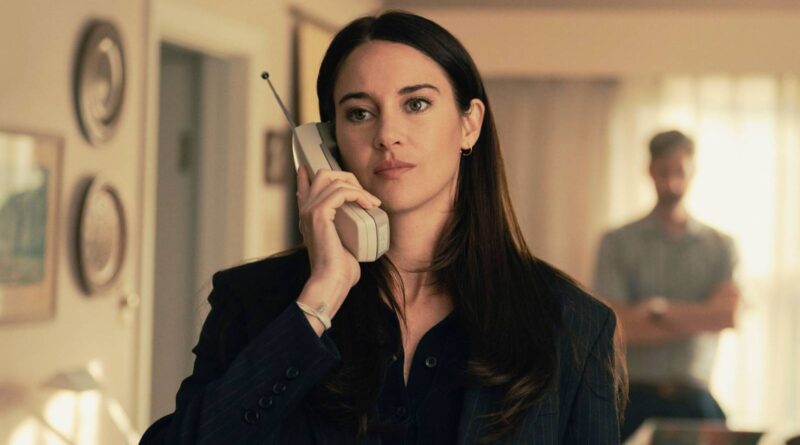
Woodley’s newest project is Unabomber, which centers on the famous domestic terrorist Ted Kaczynski (Jacob Tremblay). The film switches between two timelines — Kaczynski’s college years at Harvard in the late ‘50s and the manhunt that eventually led to his capture in 1996. Woodley plays a fictional FBI agent named Joanne in the latter segment, who cleverly uses linguistics from Kaczynski’s manifesto to track him down.
Collider got the chance to speak to Woodley about her work in the project. During the conversation, she discussed subverting typical FBI agent stereotypes, the research and background work she did to prepare for the role, the impossible situations her character finds herself in, and more.
Shailene Woodley Actually Read the Unabomber’s Manifesto to Prepare for Her FBI Agent Role
“For me, the script is the bible.”

COLLIDER: I love how, in this movie, your character doesn’t feel like the run-of-the-mill FBI agent that you often see in these films, especially because she has this focus on linguistics. I’m curious if you can delve more into that aspect of her character and how she uses this grammar and syntax to crack the case.
SHAILENE WOODLEY: Yeah, I loved that aspect of her, too, because it is unexpected. Linguistics, that’s her background, but I also found it really interesting that she leaned so much on her instinct, and there was this guttural hunch that she kept feeling and that she kept expressing to her colleagues that kind of fell on deaf ears, and actually, she was told that she was wrong. I can’t imagine what it must feel like, on top of the frustration of not being able to find this person after decades of devoting one’s life and energy towards it, the frustration of going, “I have the physical proof from my expertise — from what I can see — and you don’t care because it looks different than what you think it should look like.” That was one of the things I loved that the script explored, and I loved playing with Joanne.
I love how she works really closely with the manifesto itself. I’m curious if you read that in your research and if there’s anything that you specifically noticed that interested you when you delved into that.
WOODLEY: I did read the manifesto. I know some actors lean heavily on external research, but for me, the script is the bible, and the script has the movie that I signed on to make. That is the movie that the filmmaker is making. And so, while I did read the manifesto, the thing that I tried to focus on the most as Joanne was the excerpts from the manifesto that were in the screenplay and the things that I knew that Janus would be putting in the edit, doing the inserts on, leaning into the importance of those and how those specific sentences, those specific idioms, and the things that were involved in that were translated to Joanne ultimately being able to find Ted.
Shailene Woodley Reveals the Unexpected Questions She Asks to Flesh Out a Character’s Background
“She was probably the kid who read the back of the box of Cheerios.”

I know you mentioned you don’t do a lot of external research or rely on that, but I am curious if you fleshed out her personal life at all, just because we don’t see a lot of that. Is there anything you filled out in her background that helped you get a better sense of who she was and how to approach her?
WOODLEY: Yeah, of course, I did. The thing that always interests me in films is when you don’t get to see someone’s background. You’re like, “Does this person have friends? What food does she eat? Is she microwaving Hot Pockets, or is she going home and cooking because it’s her way of decompressing? Does she take long showers or short showers?” There are so many aspects to a person’s choice that make up where their mind is. One of the things that struck me about Joanne was that she was someone who I felt was quite steady. In order to be someone who studies linguistics and has the ability to sit there and read something over and over and over again, and then remember something from the past to connect a current dot to, that’s a type of personality that I personally am not and have zero connection to as Shailene.
A lot of the background that I implemented for Joanne was like, “Why does one become that way?” She was probably the kid who read the back of the box of Cheerios and noticed something that I would have never noticed as a child. [I was] thinking about people who I grew up with who were more of that type of person. Those things are fun to me. Part of what we do is really leaning into make-believe and imagination, and creating a whole person, even though what people get to see in the film is just snippets of a human being.
Shailene Woodley Breaks Down Her Character’s Impossible Dilemma in ‘Unabomber’
“This isn’t about me, and this isn’t about us.”

She has to make the choice to leak the fact that Ted’s brother gave him up so they don’t release his name, and there’s a flicker of what looks like guilt on her face. I’m curious if you can delve a bit more deeply into that moment and the dynamic she develops with David throughout the film.
WOODLEY: I think Joanne is someone who really operates out of integrity and doing things the way they’re supposed to be done, and not manipulating a situation so that she can receive clout or praise. Even at the end, after they find Ted and she returns to the office, people are clapping — I imagine that, for her, was an embarrassing thing. Because she’s like, “This isn’t about me, and this isn’t about us. This is actually like a very sad thing that’s happened, and that has happened for decades. It’s sad for the people who were victims of this. It’s sad that someone now is going to print the whole thing.” I think Joanne just saw it as a sad situation.
With David, the decision she made to do what she did compromised her personal moral integrity and her personal value system, and that’s where that flash of guilt came from. She had to contend with what’s maybe better on the macro level with the North Star that she’s so fiercely dedicated to and devotes her life to on the micro level.
Unabomber is now streaming on Netflix.

- Release Date
-
September 25, 2026
- Runtime
-
97 Minutes
- Director
-
Janus Metz
- Writers
-
Nelson Greaves, Sam Chalsen
- Producers
-
Sophie Cassidy