
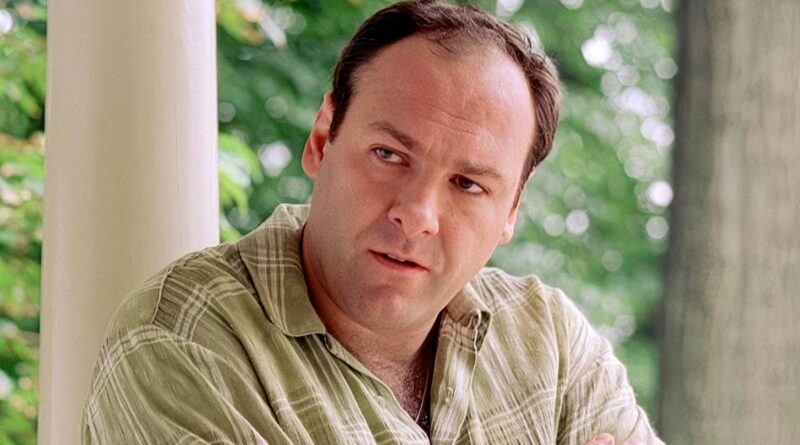
Only 5 TV Shows Are Even More Groundbreaking Than ‘The Sopranos’
Before diving into looking at shows that might’ve been more groundbreaking than The Sopranos, it’s worth stressing that The Sopranos is well and truly deserving of its reputation for being unbelievably groundbreaking. Also, before anyone gets upset about some of the shows below, know this: none are as good as The Sopranos. The Sopranos had consistency and depth in spades, and it’s one of those rare shows that gets better the more you watch it. It’s also easy to revisit every year or so, which is saying something when the show’s 86 episodes long, as with episodes that all hover around the one-hour mark, you do need, inevitably, dozens of hours to get through a single watch.
With the following shows, though, their contributions to TV, as a medium, ought to be just as celebrated as what The Sopranos did. They’re being considered as “more” groundbreaking mostly because they came first, and so there are things you can identify with each that might well have influenced parts (or at least episodes) of The Sopranos. They’re important and influential shows, is the main thing, and if groundbreaking and/or revolutionary television interests you, culturally/historically important shows like these are definitely worth exploring, be it before or after your latest rewatch of The Sopranos. It’s up to you!
5
‘Oz’ (1997–2003)

Debuting two years before The Sopranos is the main thing Oz has going for it, for present purposes. It was not – and never managed to be – a better show than The Sopranos, but it did air first on HBO, and it pushed some serious boundaries in terms of content. Well, actually, the way it exceeded The Sopranos was in feeling well beyond anything that had been seen on TV before it, if you’re talking adult content, violence, and generally shocking things. Oz was set in a maximum-security prison, and for six seasons, it made life there look absolutely miserable and unfathomably deadly.
You can likely credit Oz for pushing the prison genre overall, like, looking at prison movies, too, because few have gone as far as Oz.
People died a lot throughout Oz, and The Sopranos also became famous for its character deaths. Oz was probably more ruthless on that front, though, and plenty of the deaths were more graphic, too. You can likely credit Oz for pushing the prison genre overall, like, looking at prison movies, too, because few have gone as far as Oz. Whether it ended up being a show that wanted to be shocking just for the hell of it is up for debate, and similarly questionable is the quality throughout Oz’s run (the last couple of seasons were a bit odd), but there’s too much it did as a radical piece of television to not consider it an important part of TV history.
4
‘The Prisoner’ (1967–1968)

While it’s called The Prisoner, this one’s so much harder to define or talk about than Oz, and it’s also not really a prison show like that one (that aired 30 years later) was. You could just say it was a drama series, and sure, that’s not too misleading when you consider the fact that The Sopranos also gets labeled as a drama while being a lot more than “just” a drama, but The Prisoner was even more experimental. The Sopranos had those odd dream sequences decently often, sure, but The Prisoner was more unapologetic with its surrealism, and also a good deal harder to get into, even with an intent to thoroughly analyze it all.
As for the premise, it’s kind of about a man who’s kept prisoner on an island, and how he discovers certain (very) odd things about the island, with all those discoveries leading to more questions, inevitably. Maybe its influence on Lost is most apparent, but in any event, that was a show that aired during roughly the same “generation” of TV as The Sopranos, and probably also got to be ambitious because of The Sopranos. But the odder moments of The Sopranos owe a fair bit to The Prisoner paving the way for a drama (and sci-fi, plus some other genres) series to be odd and genuinely challenging. See also another show that first aired in the early 1990s… but more on that one shortly.
3
‘Buffy the Vampire Slayer’ (1997–2003)
You’re free to laugh at this series being here if you really want to, but Buffy the Vampire Slayer being perhaps more groundbreaking than The Sopranos is not necessarily the same as it being better than The Sopranos… though the quality here is much closer overall than you might expect. Buffy the Vampire Slayer is let down by having some weak episodes throughout its run, while The Sopranos at its weakest was still decent TV, and then there are probably only two or three episodes that feel kind of weak in the first place. With Buffy the Vampire Slayer, though, every season but its first had 22 episodes, so there was a total of 144 that aired in a little over six years, which basically ensured that they wouldn’t all be winners.
Though for so many to be so great is something, and if The Sopranos revolutionized cable television, then Buffy the Vampire Slayer, of all the shows that started in the 1990s and finished in the 2000s, perhaps most revolutionized network TV. There are some seriously large-scale stories that take place over multiple episodes found within each season, and then various things set up in earlier seasons that don’t pay off until some years later. It’s an incredibly intricate show, on a writing front, and had such strong continuity and character development that’s easy to take for granted now, when serialized TV is so popular, but perhaps no other show did that kind of thing as well as Buffy the Vampire Slayer, at least for the time that it was airing on TV.
2
‘Twin Peaks’ (1990–1991, 2017)

Twin Peaks is probably the link between The Prisoner and The Sopranos, taking influence from the former while ultimately influencing the latter in ways that the creator of The Sopranos, David Chase, doesn’t mind acknowledging at all. It’s again concerning the surrealism and dreamy stuff, with Twin Peaks having a bit more of a focus on that side of things, functioning as a fantasy show at times, and sometimes fully indulging in horror, even, while The Sopranos would have dreamlike (or nightmarish) scenes a little less frequently… but when they did happen, they would leave a massive impact.
It’s also worth highlighting Twin Peaks above Buffy the Vampire Slayer for current purposes because it aired its first two seasons a little earlier, and it had a complex story that was effectively serialized… until it got resolved a bit too early. That was a shame, and hurt the second season of Twin Peaks, but that second season is still fairly interesting after the central mystery is solved, and then you’ve of course got the third season (AKA Twin Peaks: The Return) that still feels like one of the boldest pieces of television maybe ever? Twin Peaks deserves a spot here, when talking about groundbreaking shows, for its two early 1990s seasons alone, but then it ultimately scores a few extra points for the third season that’s probably going to prove influential in ways that haven’t even been fully realized (or feel observable) yet. Watch this space and stuff.
1
‘M*A*S*H’ (1972–1983)

Like with Buffy the Vampire Slayer, it’s hard to argue that M*A*S*H is an absolutely perfect show, since there are 11 seasons and more than 200 episodes here, so there will inevitably be some misses. Maybe some of them weren’t necessarily misses when they aired, but the first couple of seasons do feel like ancient television, to be brutally honest, and so what was funny 50+ years ago might not be funny now. And no, it’s not necessarily a case of being “problematic” or anything that convenient. Like, it can be that, if you find it offensive, but it’s up to you. It depends. Part of the problem, though, might just be humor changing a little over time.
Even then, parts of those first couple of seasons are still funny, and there are genuinely clever episodes of M*A*S*H to be found early on, as well as episodes as early as the first season that effectively blend comedy and drama. It’s that blending of genres that makes M*A*S*H groundbreaking, with it finding its footing around season 3 (or if not by the end of that season, then definitely in season 4) and proving hugely influential as a sitcom that really was more than “just” a sitcom. There’s emotional complexity here and a willingness to get both serious and cut loose, jumping around between those two extremes in a surprisingly clean way. Further, the finale of M*A*S*H really redefined what a final episode of a long-running TV show could be capable of, so its age and all its positive qualities really make it a show worth highlighting as perhaps the most influential of its time (or even of all time).

M*A*S*H
- Release Date
-
1972 – 1983-00-00
- Showrunner
-
Larry Gelbart
- Directors
-
Larry Gelbart
-

-

Loretta Swit
Margaret Houlihan