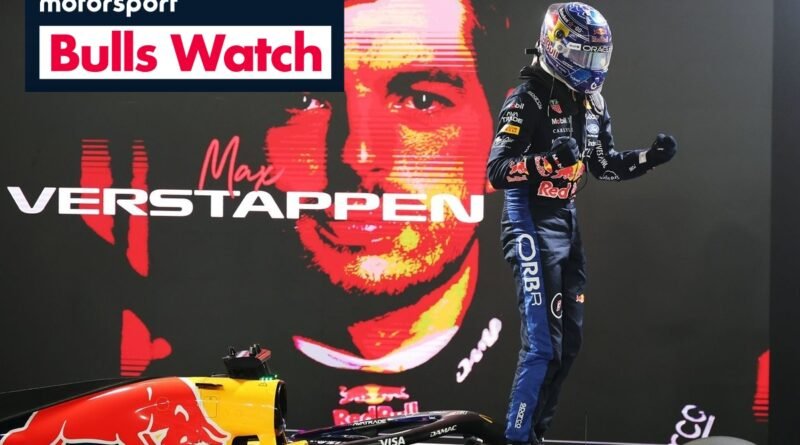
Max Verstappen details his ideal 2030 F1 Formula
Fresh off winning a chaotic, 352-overtake Las Vegas Grand Prix that he bluntly dismissed as feeling like “playing Mario Kart“, Max Verstappen has laid out what he believes Formula 1 should actually chase when its next major regulation overhaul arrives in 2030.
Speaking to the media ahead of the Qatar Grand Prix at Losail, the four-time world champion was asked what a “pure” Formula 1 looks like – and whether F1 should lean on DRS, overtake modes, or push-to-pass once the current rules cycle wraps up.
Verstappen’s starting point was unambiguous: trim the weight, ditch artificial straight-line tricks, and stop letting electrical harvesting dictate how drivers attack a lap.
“Well, I mean lighter cars for sure,” Verstappen said. “With all the things that we have developed in the past, if you see from the 1980s to 2010, of course you had dominant cars, dominant teams that were sometimes over a second or two seconds a lap faster.
“Now I don’t think you will have that anymore, but you can still come up with a formula where maybe a car is just super draggy in a straight line, so you don’t need to rely so much on DRS.”
Under 2026’s technical rules, F1 did shrink dimensions and cut minimum weight from 800 kilograms to 768 kilograms, yet the switch to a near 50–50 combustion-to-electric split – boosting MGU-K output from 120 kW to 350 kW after dropping the MGU-H – has placed a lot of reliance on battery harvesting.
In Nevada, Verstappen conceded the spectacle worked for television while insisting, “For me personally this isn’t Formula 1, the way that we are racing. It looks great on TV, but this isn’t how it should be.”
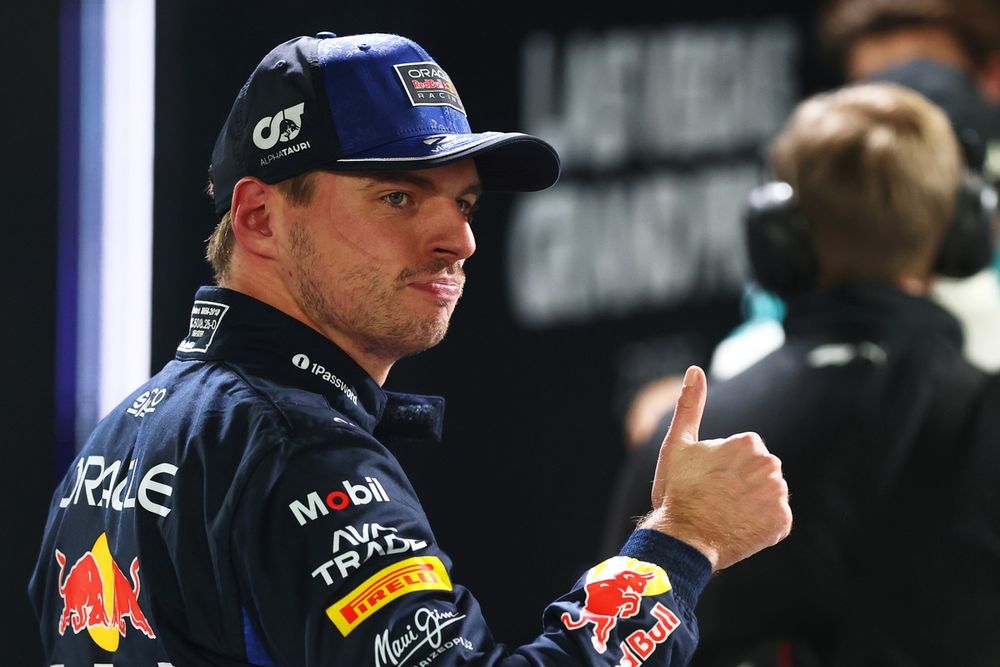
Max Verstappen, Red Bull Racing
Photo by: Mark Thompson / Getty Images
For Verstappen, the ideal fix does not require banning overtaking aids altogether – only restoring an engine that behaves naturally under the driver’s right foot.
“Like a push-to-pass system for me is fine, but it needs to be a much easier engine,” he explained. “Like every time I do a show run, for example in an RB7 or whatever, it’s just so nice to drive because the throttle responds, everything is just easy, it drives off nice, the car is not shaking about, it has no lag, stuff like that. It’s just a lot nicer to drive than what we have currently.
“So as long as we can get back to an engine close to that, I know it needs to be some kind of hybrid element, probably turbocharger, because otherwise you are not even allowed to drive at some tracks anymore because it’s too loud, which is fine, as long as it’s not overruling the natural driving element, which of course at the moment is happening.”
Red Bull’s championship-winning 2011 RB7 tipped the scales at just 640 kilograms including the driver – 128 kilograms lighter than today’s machinery – and paired a crisp, naturally aspirated 2.4-litre Renault V8 revving to 18,000 rpm with a compact KERS unit.
FIA’s 2030 V8 reset – and the commercial catch over old-school tracks
Verstappen’s wishlist aligns closely with the direction F1’s power brokers formally locked in last week. On 20 November in Las Vegas, the FIA announced a unanimous agreement with F1, teams, and manufacturers on a 2030 power unit framework centred on a 2.1-litre turbocharged V8 running on advanced sustainable fuels with “limited hybridisation” – bringing eight-cylinder engines back for the first time since 2013 and cutting the current 2026 engine era short by a year.
Subject to formal approval by the FIA World Motor Sport Council in Shanghai next month, FIA president Mohammed Ben Sulayem pledged the new rules would marry the V8 to “lighter, simpler and more affordable cars that put driver skill at the heart of the competition.”

Max Verstappen, Red Bull Racing, Isack Hadjar, Red Bull Racing
Photo by: Guido De Bortoli / LAT Images via Getty Images
Where Verstappen remained far more pragmatic was on the calendar itself. Asked whether smaller 2030 cars could clear a path back to traditional, old-school circuits alongside newer street venues, he pointed straight to the business model driving modern grand prix scheduling.
“They can always go back; it’s not about that,” Verstappen said. “These tracks host a lot of different races; it’s not that they can’t host a Formula 1 race, but you have to, of course, also look at it from F1 side, where you have the opportunity to make a lot of money when you are also closer to a city centre, inviting guests over, so there are a lot of things that come into play to whatever is their best track.
“I just look at it; of course it’s just a driving perspective, which for me Spa is the best, but that’s also, I can understand, yeah, it’s in the forest, which if you compare that to Vegas or Miami, yeah, I can understand it’s not at the same level, but it’s beautiful, I like it, to drive it’s fantastic.”
There is a neat irony in Verstappen’s choice. Under F1’s European rotational agreement pairing Belgium with Barcelona-Catalunya, Circuit de Spa-Francorchamps is locked in for 2026, 2027, 2029, and 2031 – meaning Verstappen’s favourite track is set to sit out the 2030 season, the very year F1’s lighter, V8-powered reset is scheduled to hit the grid.
We want your opinion!
What would you like to see on Motorsport.com?
– The Motorsport.com Team