Eric Cantona, Frank Worthington, Faustino Apsrilla and the rest of the footballing mavericks who rocked the beautiful game
Football has always had its mavericks, but some players couldn’t help but take things to another level.
From wild nights out and outrageous antics to long hair, leather jackets and a love of loud guitars, these were the footballers who brought a genuine rock ’n’ roll spirit to the beautiful game.
FourFourTwo runs down some of the players who proved that football and rock ’n’ roll were a match made in heaven…
Frank Worthington

At Baileys nightclub in Leicester in 1975, Frank Worthington dressed up as Elvis Presley and belted out the hits of the King of Rock’n’Roll.
The iconic forward worshipped Elvis and did his best to emulate that rock’n’roll lifestyle throughout a career in which he netted more than 250 goals and was idolised pretty much everywhere he went.
Hailing from Halifax, Worthington defied the stereotype of the no-nonsense northerner, displaying sublime skills on the field for Huddersfield Town, and living a flamboyant life off it, turning up for an England under 23s match in cowboy boots.
A 1972 move to Liverpool collapsed after he was found to have high blood pressure, with Bill Shankly initially sending him off to Majorca for a week to sort himself out. How did he use the time? He consorted with five different women, including a former Miss Great Britain, before returning to Merseyside with even higher blood pressure, and failing the medical again.
A notorious womaniser, he later named his autobiography [i]One Hump Or Two?[/i] “I was living a bit too much in the fast lane,” he admitted. Not always heading in the right direction, either: once, he had four court appearances in a year because of his driving – one was for doing a U-turn on the motorway in his Ford Mustang.
Defenders had no more of a clue which way he was going – after starring for Leicester, he scored a memorable goal for Bolton against Ipswich when he picked up the ball with his back to goal outside the area, juggled it, flicked it over both his own head and the head of a bamboozled Terry Butcher, then volleyed it into the net, all in one motion. Trotters boss Ian Greaves labelled him ‘the working man’s George Best’.
Greaves had also been his manager at Huddersfield – once growing tired of Worthington playing Elvis tapes on the team bus, ejecting the cassette and throwing it out of the window. It didn’t curtail the forward’s love of the King – when he moved to Sunderland, he’d turn up at training dressed as Elvis.
Despite his talent, Worthington earned only eight England caps – the cowboy boots at the under 23 game didn’t endear him to Alf Ramsey, and he irritated future Three Lions boss Don Revie with some showboating against Leeds, amid a perception that he wasn’t committed enough. “I admit that I used to get about a bit, but I’m quieter these days,” he insisted in 1978. “Instead of going out seven nights a week, I keep it to six.”
Eric Cantona

Liam Gallagher claimed that Cantona “ruined my life in the ’90s”, so brilliant was he for Manchester United, the big rivals of Gallagher’s Manchester City.
Yet the singer’s respect for him was so great that he later invited King Eric to star in the video for his 2020 single Once, dressed in full regal attire.
Cantona always created magic on the pitch, but he was banned for a kung-fu tackle on an opponent during his time at Auxerre, then infamously repeated it on a fan at Selhurst Park. This led to the
Frenchman’s lengthy ban and enigmatic musings about seagulls and trawlers.
In true rock-star style, he abruptly quit in his prime, at the age of 30. “Cantona was the last rock ’n’ roll footballer,” declared Gallagher, still going at 52.
Leighton Baines

The left-back may not have been a flair player like Worthington, but he became something of an indie icon during 15 years in the Premier League.
Baines became known for taking a guitar with him on England away trips and even penned a regular music blog for Everton’s official website, hailing the likes of Tame Impala, The xx, Can, Lana Del Rey and The Black Keys, some before they became bonafide superstars.
Like former Evertonian Pat Nevin before him, Baines had his finger on the pulse, and also adopted the sideburns of a mod for some of his career. “He’s a quiet lad, but as I got to know him, it became clear he was a massive music fan,” explained singer Miles Kane, having become pals with the defender. “We started talking music, listening and swapping tracks. He put me on to Tame Impala before they hit it off.”
Now assistant manager at Everton, the full-back even inspired Irish band The Baines to name themselves after him. There can be no greater rock’n’roll credential.
Gunter Netzer
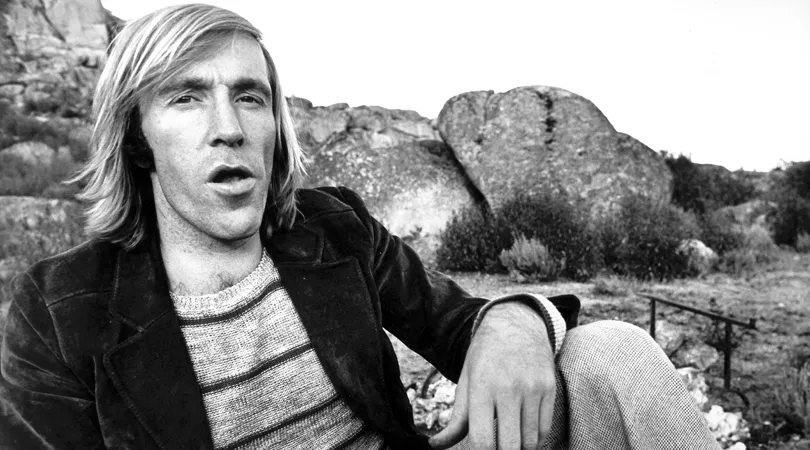
In an era when most German footballers were still listening to banal schlager music, Netzer was paying closer attention to The Rolling Stones and Bob Dylan.
A rebel from the start, Netzer’s long flowing locks were unheard of in the Bundesliga in the late 1960s – no-one could match his passing ability either, as the playmaker spearheaded Borussia Monchengladbach’s rise from the second tier to two German titles, earning the nickname Karajan, after a famous Austrian conductor. Netzer was also the star as West Germany took England apart at Wembley during qualifying for Euro 1972, before helping his country win the tournament that summer.
An aversion to authority meant he didn’t always see eye to eye with club boss Hennes Weisweiler: keen to conserve his energy for the key moments during games, rather than worrying about things like running around or tackling, he’d also worried his manager by opening a nightclub. “This is the end,” Weisweiler groaned, concerned about the distractions it would lead to. Previously, Netzer had nearly killed himself after crashing his yellow Ferrari, ruling himself out of the 1970 World Cup.
When the midfielder agreed to join Real Madrid in 1973, an irked Weisweiler dropped him for the DFB Pokal final – Netzer refused to come on as a half-time sub, then told the exhausted Christian Kulik to go off ahead of extra-time. “Now I’m playing,” he told Weisweiler, having subbed himself on, before scoring the winner.
Unwilling to cut his hair when he moved to Madrid, he twice won La Liga during three years in Spain but once took advantage of a two-week injury lay-off to covertly fly to Las Vegas without permission, after being invited to the wedding of Frank Sinatra’s daughter Tina. Obtaining a second passport and sneaking through Madrid airport in disguise, he was sat alongside Sammy Davis Jr and Neil Diamond at a Sinatra concert on the night before the wedding, while his team-mates were playing a game against Real Murcia that weekend.
Back in Madrid days later, oblivious team-mate Ignacio Zoco asked Netzer if he’d watched any TV that weekend. The German said no. “Sinatra’s comeback show was on TV,” said Zoco, who was engaged to singer Maria Ostiz. “Maria swears there was a guy in the audience who looked just like you – you must have a doppelganger.” It would be decades before Zoco found out the truth.
Petr Cech

The legendary goalkeeper didn’t just use his hands to keep out some of the world’s best strikers – he also developed a talent for drumming.
The Czech Republic star launched his own YouTube channel, featuring videos of himself drumming along to System Of A Down, Coldplay, Thirty Seconds To Mars, Rammstein and others. Asked by FFT which band he’d join if he had the chance, past or present, he said: “Nirvana or Foo Fighters – I was always a fan of Dave Grohl.”
Cech did join folk rock band Wills & The Willing for their song Iceberg, and even released a charity single with Queen’s Roger Taylor. He’s got rhythm.
Slaven Bilic

After eschewing an umbrella at Wembley to defeat The Wally With The Brolly and guide Croatia to Euro 2008, Bilic promptly recorded his own song for the tournament, too.
The former centre-back was a guitarist in the rock band Rawbau, having fallen in love with the genre as a child. “I couldn’t imagine my life without music,” he once told FFT. “For my birthday when I was 10 or 11, my father took me to a shop and bought me my first record: Highway to Hell by AC/DC. For me it was Iron Maiden, AC/DC, Judas Priest, Led Zeppelin and Black Sabbath, then Metallica, Slayer, Megadeth and Guns N’ Roses.
“My brother is three years older, and you get everything from your brother. The guitar was in the corner of our room, and I’d pretend to play it like I was Angus Young of AC/DC.”
In 1996, by then a Croatia international defender, Bilic joined West Ham from German side Karlsruher. “I knew every word of every Iron Maiden song, and they’re big West Ham fans,” he explained. “After I signed, I went to the players lounge one day and thought ‘My god, is that Steve Harris?’ Ian Bishop had invited him because they were friends. We spoke and I was almost shaking.
“The first time I saw them live was in Manchester, and they invited me backstage after the gig. I thought ‘Oh, it’s going to be like what you read about in those autobiographies, with the parties and everything’. But when I opened the door, one of the band members was blow-drying his daughter’s hair! We’re still friends and text each other.”
Music helped him cope with life after playing, too. “When I had to retire early, I wasn’t in a good place,” he said. “I was into the guitar, though, and wrote some songs, lyrics, riffs – then I felt good again. I had some friends in music and we started jamming, then recorded some songs. Then Hajduk Split asked me to take over and the rest is history.”
Seven years later, Bilic had guided Croatia to the Euros when his band released the song Vatreno Ludilo (Fiery Madness). The title summed up their tournament: they thought they’d scored a 119th-minute winner in the quarters against Turkey, only to dramatically concede in the 122nd minute, then lose a penalty shoot-out.
Bilic has since had spells as manager of West Ham, West Bromwich Albion and Watford – sacked by the trigger-happy Hornets after less than six months. Fire-y madness, in that instance.
German Burgos

Burgos wasn’t content to be a guitarist – the former Atletico Madrid goalkeeper wanted to sing.
A huge bloke with long unkempt hair, who sometimes took to the stage topless, it’s perhaps no surprise that his vocals were a little rough and ready at times. He wasn’t about to challenge Adele for any awards, but the shot-stopper looked the part on stage, releasing five singles with his bands The Garb and the Burgos Simpatia (‘Burgos Sympathy’), drawing on influences from AC/DC to Guns N’ Roses.
Nicknamed Mono (‘Monkey’), he even performed songs on TV shows during a playing career that saw him represent Argentina 35 times, before becoming Diego Simeone’s long-serving assistant manager at Atleti. Bad cop and even badder cop – scary stuff.
Stan Bowles

When FourFourTwo asked Pete Doherty which former QPR player he’d bring back to play for the Loftus Road club’s current team, he didn’t have to think for long.
“Stan Bowles,” explained the Libertines wild child. “I always wonder how someone like him would fit in today’s game. I’d love to see him drifting around scratching his leg on the halfway line, give him the ball and see what the 24-year-old Stan Bowles could do. They thought it was funny back then when he’d take a programme off a fan and read it halfway through the game, but now he’d probably get fined and banned for two matches.”
Bowles left QPR in the year that Doherty was born, but his legend lived on – he was later voted the club’s greatest ever player.
Born in the north west, he started his career at Manchester City before a nightclub row with boss Malcolm Allison, then a spell at Bury, where manager Ernie Tagg remarked that “if he could pass a bookies as well as he passes a football, he’d be a very rich man”. The gambling addict was said to sometimes pause during games and ask fans with transistor radios whether they knew the latest horse racing results.
He possessed supreme ability, though – as a Carlisle player, he remarkably helped them beat Roma in the Anglo-Italian Cup at the Stadio Olimpico, angering the home crowd by doing keepy-uppies mid-match. The replacement for Rodney Marsh at QPR, he won five England caps and claimed to have deliberately sent the FA Cup trophy flying during a match at Sunderland. Days after the Wearsiders had won the cup, it had been placed pitchside by the halfway line for a Second Division fixture.
“There were a couple of us who had a bet on who could knock it off the table with the ball,” he said. “With the ball at my feet, I tore off straight across the park. The whole ground knew I’d done it on purpose.”
A spell at Brian Clough’s Nottingham Forest wasn’t successful – he walked out on the 1980 European Cup final after the manager left him out of John Robertson’s testimonial match, but his rock’n’roll lifestyle resulted in a song that reached number 36 in the charts.
“It was about Stan and my mate Peter Doherty,” explained Dominic Masters of The Others, after releasing the song [i]Stan Bowles[/i] in 2004. “Pete Doherty is the Stan Bowles of the music world, and Stan Bowles was the Pete Doherty of the football world.”
Gaizka Mendieta

The Spaniard met FFT in central London in 2019 – immediately grabbing a guitar, leaping into the air and demanding that we took his photo.
OK, that might not be quite how it happened – we’d actually hired the Gibson LP Gold Top from a nearby guitar store for the photoshoot, after hearing he was a huge rock fan. He’d even played guitar on stage alongside band Los Planetas at the Benicassim Festival in his homeland.
“I like Wolf Alice at the moment,” he explained, after spending a good minute just admiring the guitar we’d brought along. “British music is so rich. When I played in Spain, no one had the same taste in music as me. They’d put on rap in the dressing room and I’d think ‘OK, come on, that’s enough now!’”
Dani Osvaldo

Long before Osvaldo quit football to take up music, he was displaying true rock’n’roll credentials – just by generally acting like a nutter.
The Argentina-born Italy international was suspended by Roma in 2011 for punching team-mate Erik Lamela in the face during an argument – well, he did have one of those faces – then was sold after rowing with caretaker boss Aurelio Andreazzoli and refusing to attend an awards ceremony.
It led to a £12.8m move to Southampton, where he turned Vincent Kompany inside out then chipped the goalkeeper against Manchester City, but was soon banned for three matches for a touchline fracas, then headbutted team-mate Jose Fonte during a training ground incident and never played for the club again.
At Inter, he fell out with Mauro Icardi (not exactly a stranger to falling out with team-mates himself), and was suspended for not turning up for training. At Boca Juniors, he had a contretemps with the manager for smoking in the dressing room, and was fired.
His response? To quit football at 30 and focus on music. “People look at me like ‘You’re crazy, you played in some of the best teams in the world and you decided just to quit to do this?’” he admitted. “They don’t understand – it’s my passion.”
Months later, Jorge Sampaoli tried to persuade him to change his mind and sign for Sevilla, but was unsuccessful. “He told me ‘Dani, I’m not asking anything of you, you can do what you want on the pitch and off it, but I need a striker’,” Osvaldo explained. “I said ‘But boss, there’s the Cosquin Rock festival!’”
The Rolling Stones fan played gigs in Barcelona as the frontman of his own band, Barrio Viejo – with a beard, tattoos and often a look of Johnny Depp, he also later appeared on Italy’s version of Dancing With The Stars. “There are so many rules in football, and I’m not good with the rules, I like to be free,” he added. “I was going crazy and decided to live the musician’s life instead.”
Osvaldo did return to football to join Banfield on a one-year contract in 2020, but lasted only six months. At least he got out of there without headbutting anyone…
Alexi Lalas

The ginger-haired goatee king was the stand-out character of the USA team that played the 1994 World Cup on home soil, and has also released not one but eight solo albums over the past three decades.
An avid fan of glam metal band Ratt, Lalas shot to fame thanks to his unusual look and his goal in the USA’s shock win over Graham Taylor’s hapless England in 1993 – everything about the centre-back absolutely screamed ‘early Premier League years transfer to Coventry City’, but sadly a move to Highfield Road fell through after the World Cup, and they had to settle for Cobi Jones instead.
Lalas meanwhile concentrated on opening for Hootie & The Blowfish during their 1998 European tour, with his band The Gypsies, and releasing a never-ending list of albums – Far from Close, Ginger, So It Goes, Infinity Spaces, Shots, Sunshine, Look at You and Melt Away
Gareth Ainsworth
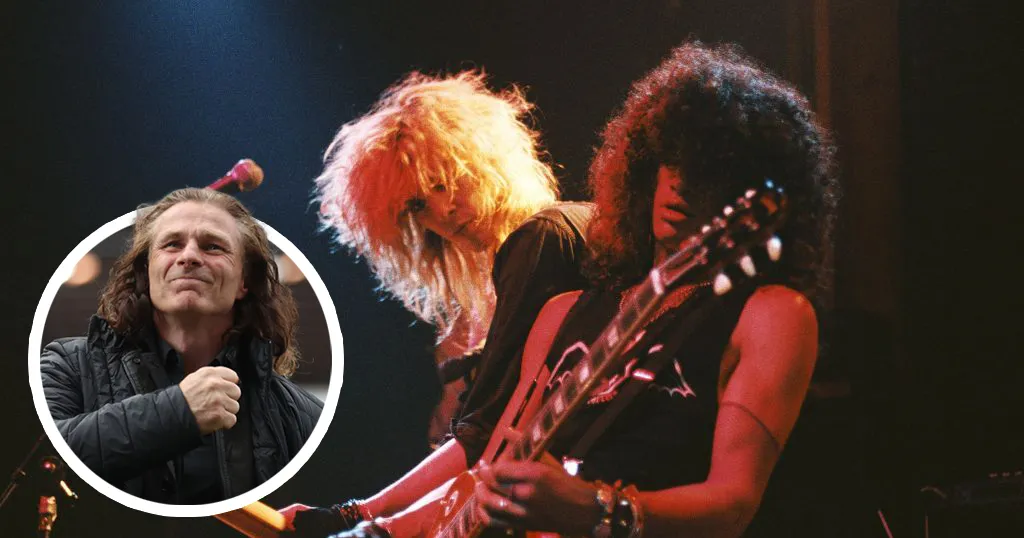
Few managers celebrate promotion by posing for photos at the training ground, using a corner flag as a microphone. But Ainsworth has always been a little bit different.
When the long-haired former Preston, Lincoln and Wimbledon winger moved into management with Wycombe, he wasn’t about to don a tracksuit on the touchline – instead, he favoured an open-necked shirt and even red cowboy boots during the Chairboys’ successful League One play-off campaign in 2020. “I don’t want to copy anyone else,” he insisted, of his managerial style. “If I did, it would probably be Jim Morrison or Michael Hutchence.”
Ainsworth has always been a rocker at heart, continuing as the lead singer of a band while managing in the EFL. “We’re keeping the Cold Blooded Hearts going and recording our own stuff,” he told FFT in 2020. “It’s been difficult because football takes over – it was much easier when I was playing and in the band Dog Chewed The Handle. Monday night is rehearsal night these days – although if we get a Monday night game on Sky, I may have to change that.”
He’s now manager of Gillingham, via a spell at Shrewsbury and a stint at QPR, where he went left-field in a different way, bringing in a Maori performer to do a performance for the squad at the training ground, in full traditional costume. Many of them were baffled.
Later asked by FFT for his opinion on the greatest rock album of all time, Ainsworth thought carefully. “I have an all-time favourite band, which needs mentioning before we get to the album – I’m such a massive fan of The Doors,” he explained. “I was a teenager when the 1991 documentary about the Doors came out and I was blown away, so anything by them is basically my idea of heaven.
“But if I’m just picking a single album, and I’m in a real rock‘n’roll mood, I’d actually have to pick a different band. In 1987, I went down to my local record shop in Blackburn and I picked up a vinyl copy of Guns N’ Roses’ Appetite for Destruction. I couldn’t believe what I was hearing and it’s still one I reach for to get the blood pumping. I have to put that down as my number one all-time album.”
Did the album title inspire his use of 16-stone human wrecking ball Adebayo Akinfenwa at Wycombe? We may never know.
Fausitino Asprilla

Colombia’s early 90s side was one of the most rock’n’roll teams in history – take your pick from afro-meister Carlos Valderrama, rampaging goalkeeper Rene Higuita or Asprilla, who was 50 per cent genius, 50 per cent madman.
Having earned himself a move to Serie A with Parma, Asprilla then conspired to miss out on playing in a single minute of the 1993 European Cup Winners’ Cup final, after injuring himself kicking a bus door during a trip back to Colombia. “A bus driver smashed into my car – when I got out to get onto the bus, he shut the door on me, so I kicked it,” he later told FFT.
“I was furious. If I’d got into the bus, I would have hit him, but he escaped. I’m a bit calmer nowadays.”
Mere months after that 2008 interview, the former Newcastle striker displayed his new zen state, by being arrested for allegedly firing a machine gun at security forces near his farm. He’s been involved in rather less controversy in recent times, instead focusing his time on teaching his horse how to play football, by riding it while wearing a Tyrannosaurus Rex costume – there’s video footage and everything. Never change, Tino.