“Not the same challenge” or an “interesting” exercise?
Formula 1’s current battery-driven formula has changed the face of a number of iconic tracks and corners this year, but nowhere is the difference expected to be as striking as at driver favourite Spa-Francorchamps.
Despite various mitigating measures, including reduced energy deployment limits and additional active aero zones, the relative lack of time spent on the brakes around the 7km circuit means the energy to find the optimal lap time has to come from somewhere else, so cars will be energy-starved around a lot of previously hair-raising corners.
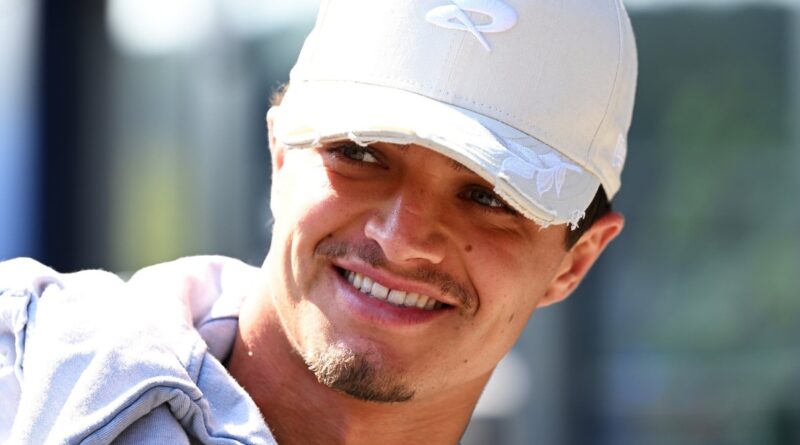
Reigning world champion Lando Norris was downbeat on what one of his favourite circuits in the world would be like to drive with the current generation of cars. “It’s certainly not going to be the same Spa,” the McLaren man said. “We’ll see what it’s like at Pouhon and in a few of the other corners, but it’s certainly not going to be quite the same challenge as what it’s always been.”
Less yo-yo racing after “random” British GP?
The racing at Spa could actually be more straightforward than it was at Silverstone, where the many straights invited yo-yo racing and made for a series of hectic opening laps as drivers passed and re-passed each other, before settling into more of a rhythm.
“Silverstone was just random,” Piastri said. “The amount of concentration you needed in the first couple of laps simply to avoid crashing with people was pretty extreme. It’s just very difficult because of trying to use the boost button, to judge whether you should use your battery now or use it later, at places like Silverstone where you’ve got four or five different straights through the lap where you can use it.”
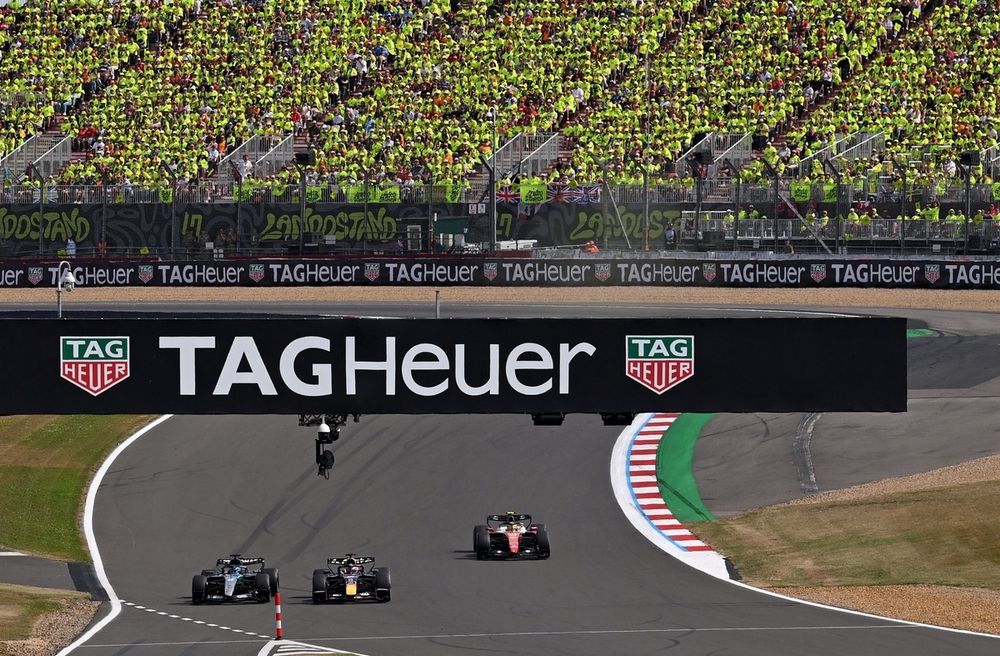
Silverstone’s British Grand Prix offered plenty of battery induced wheel-to-wheel action.
Photo by: Sam Bagnall / Sutton Images via Getty Images
Spa looks set to be a more straightforward challenge, if only because there is one very obvious strategy to deal with the long blast from Turn 1’s La Source to Les Combes at Turn 5. Having been able to harvest energy under braking, they will then have to deploy anything they have on the uphill Kemmel straight to get up to terminal velocity, before resorting to super clipping.
“It will probably actually be simple-ish because you empty the whole pack from Turn 1 to the end of the Kemmel straight anyway, unless you want to let everyone go past you,” Piastri added. “Then it’s quite a simple strategy.”
Sector 3 looks more complex, because while it does feature a number of corners, none of them require significant braking zones. It could offer opportunities for cars to sacrifice the once-feared Pouhon double-left handle on the altar of energy management. It’s hardly an enticing prospect from a driving point of view, but it does offer tactical options for the long blast towards the final Bus Stop chicane.
But until the energy equation changes for 2027 make a bigger impact on restoring F1’s driving challenge, Haas driver Oliver Bearman says the likes of Spa and Silverstone have now temporarily been displaced by the Red Bull Ring or the twisty Hungaroring, where cars will be able to go full tilt because of the many braking zones to top up the battery.
“From a driver’s perspective, if you asked me last year, where would you prefer to race, it would be here. This year I would tell you probably Hungary and Austria, as opposed to Silverstone and Spa, which sounds crazy, but that’s what it is,” Bearman said.
But the young Briton also felt F1 2026 is making him a “better driver”, so rather than be too glum he is trying to focus on finding a performance advantage from dealing with the current regulations better than his rivals.
“The way you approach some corners changes, because in some corners you have twice as much power as others,” he explained. “Some corners you really need to focus on getting a great exit. Other corners it doesn’t matter as much because you have a very short exit with only 500 horsepower instead of 1,000, let’s say.
“So, it’s interesting and it’s definitely teaching us a lot. As much as we like to complain, it’s making us better drivers.”

Photo by: James Sutton / LAT Images via Getty Images
Hamilton offered a different opinion to Bearman, as the seven-time world champion is placing a bigger importance on the quality of the racing itself than the driving.
“No, it’s the complete opposite for me,” he said. “These are the tracks that I look forward to, even if we’re slower.
“Monaco is a stunning place, beautiful country, an amazing track for a qualifying lap no matter what car you drive. But it’s the least enjoyable race because you can’t overtake.
“Just for me personally, my excitement is not qualifying, it’s racing. It’s battling with people and wheel-to-wheel racing, trying to outdo and outsmart the drivers you’re racing with. Apply pressure, defending, all that stuff. That’s what racing is, that’s what I look for. When you go to races and you can’t do that, it’s not the most satisfying.”
With regulatory improvements on the way in 2027, Norris did find it a shame that Spa will move into a rotational role, being held once every two years with no Belgian Grand Prix in 2028 or 2030.
“If you ask every driver, it’s probably in our top three or five tracks of the calendar. Therefore, it’s also a shame that it’s going to be going from every other year or whatever it’s going to be,” he added.
“I love it here. I think every driver loves it here. But we also like driving cars that are not just battery-reliant. We don’t get much of a say on those things, so that’s the way it is.”
Additional reporting by Ben Vinel
We want your opinion!
What would you like to see on Motorsport.com?
– The Motorsport.com Team