
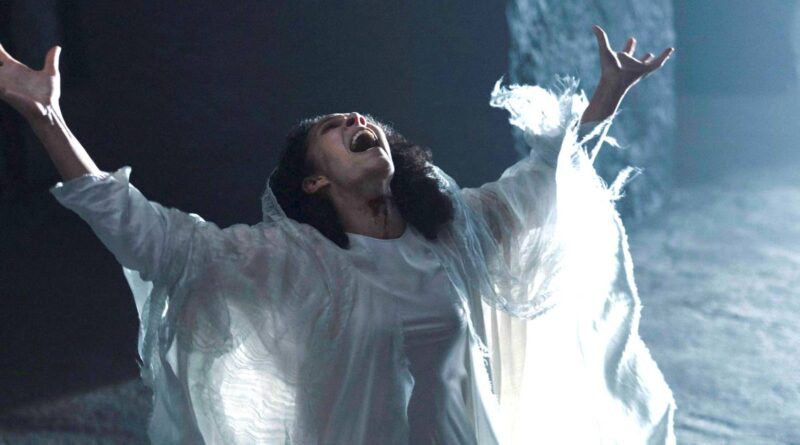
2 Years Later, HBO Max’s 6-Episode Sci-Fi Is Still Worth Watching
HBO Max has been the center of prestige television, with shows like The Pitt, House of the Dragon, and The Last of Us. With all these shows competing for dominance, some fall through the cracks, as in the case of the 2024 series, Dune: Prophecy. Dune has always been a popular property but has only cemented its foothold in pop culture following the Denis Villeneuve series of movies. It is the closest that the Frank Herbert sci-fi novels have reached a perfect adaptation, and it was no surprise when a prequel series took root on HBO.
Dune: Prophecy is inspired by Herbert’s son, Brian Herbert’s book, Sisterhood of Dune, which charts the rise of the famed order of the Bene Gesserit. This society of women is trained in the art of manipulation so advanced that they can change their own molecular structure. They ultimately start breeding bloodlines to create the Kwisatz Haderach, the messianic identity that Paul Atreides (Timothée Chalamet) adopts in the Dune films. Dune: Prophecy takes place thousands of years before this culmination and is more than just a prequel of Paul’s story. The HBO series doesn’t live and die by the success of the current timeline, but puts forward themes that make Dune: Prophecy even more significant years later.
‘Dune Prophecy’ Deserves More Attention For Its Resonant Themes
When it originally aired, Dune: Prophecy didn’t get the splashy reception that The Penguin or House of the Dragon did, but two years after its premiere, it is more relevant than ever. For six episodes, the series was able to accomplish what Denis Villeneuve’s epic space operas didn’t have the time for. The sci-fi drama follows the origins of the Bene Gesserit, led by Valya Harkonnen (Emily Watson), the infamous Baron Harkonnen’s (Stellan Skarsgård) ancestor.
Before settling on Geidi Prime, Valya and her sister Tula (Olivia Williams) lead a school for girls that trains them in the secret powers of their order. Valya was the one who invented the use of the Voice, an instrument that allows the speaker to control those she is talking to. The series not only focuses on the use of power, but also on other aspects of Frank Herbert’s books that fell by the wayside in the feature film adaptations.
The events of Dune: Prophecy are heavily influenced by the Butlerian Jihad, otherwise known as the War of the Thinking Machines. This conflict informs most of the decisions made in the series, starting with Valya’s crusade to elevate her family’s status. Exactly as it sounds, this war started because of the prevalence of Artificial Intelligence. Herbert’s famous quote from the first Dune book states: “Once men turned their thinking over to machines in the hope that this would set them free. But that only permitted other men with machines to enslave them.”
This war kicks off Dune: Prophecy and ultimately inspires the Imperium to outlaw thinking machines as a result. AI was starting to be a cause for concern when the series was first put into production, but the HBO show has more than predicted the ramifications of thinking machines in everyday life. Dune: Prophecy also leans into the consequences of people trying to harness thinking computers long after it has been outlawed. The show demonstrates the Bene Gesserit’s desire to use AI to predict what bloodlines should be combined to create the Kwisatz Haderach. Everyone who knows Dune lore understands that act will have massive ramifications down the line.
Artificial intelligence and the Bene Gesserit are all about control. They have found a way to control politics from the shadows and will be instrumental in creating a genocidal dictator in Paul Atreides’ time. Dune: Prophecy was ahead of its time, just as Herbert and his writings were ahead of their time. The series deserves a second chance in the cultural zeitgeist, as it has the most to say about the modern world.

- Release Date
-
November 17, 2024
- Directors
-
Anna Foerster
- Writers
-
Diane Ademu-John, Kevin J. Anderson, Brian Herbert, Frank Herbert