
10 Great Fantasy Video Games You Haven’t Played
Video games often utilize the fantasy genre due to the nature of the medium itself. Since everything is animated by computers and programming, developers don’t have to worry about the constraints of real life. Thus, they can tell stories and create worlds that would be otherwise impossible, in a way that movies or books just cannot emulate.
Most fantasy games are RPGs, but there are plenty that are platformers, adventure stories, or puzzle games. Since fantasy is such a common concept in the video game world, it’s inevitable that there will be some amazing entries that get swept under the rug, some to the point of being incredibly obscure. These are the best fantasy video games that you probably haven’t played, but you absolutely should, especially if you have a genuine appreciation for either the genre or the medium.
‘For the King II’ (2023)

The original For the King was a pretty good experience on its own, but its sequel, For the King II, was even better in all the right ways, a dream game for anyone who likes tabletop RPGs. Played like a game of Heroscape, it features hexagonal tiles and turn-based combat with some roguelike elements, such as randomly generated environments and permanent death.
The story is simple: a queen has become evil, and it’s up to a ragtag band of heroes to stop her. The game can be frustrating on account of the fact that it really doesn’t hold your hand, making it somewhat of a challenge to fully absorb. However, once the concept is grasped, it’s easy to dump endless hours into this game before you even realize they’re gone. For the King II is just an all-around magnificent fantasy game that is totally worth every second of your time.
‘Minit’ (2018)

Minit might look minimalistic and basic, but it’s actually a really fun, if highly gimmicky game. You start as a duck creature who emerges from its house one day to find a magic sword lying on the beach. Upon picking up the sword, the duck is cursed to die every 60 seconds. Once you die, you awaken back in your home. All your progress will be saved, and you will retain the items you’ve collected, but you will essentially be forced back to your starting position.
This game is stress-inducing but really inventive. The entire map is intricate and cleverly designed to allow for easier navigation, which is essential due to the short time limit you have. Minit is a fantasy puzzle adventure game that forces players to think on their feet and adapt to their surroundings. It sounds really difficult, but it’s actually not super hard, and it isn’t very long either. What’s more, there is an actual political message concealed beneath it all, although this is subtle and only visible if you look hard enough into it.
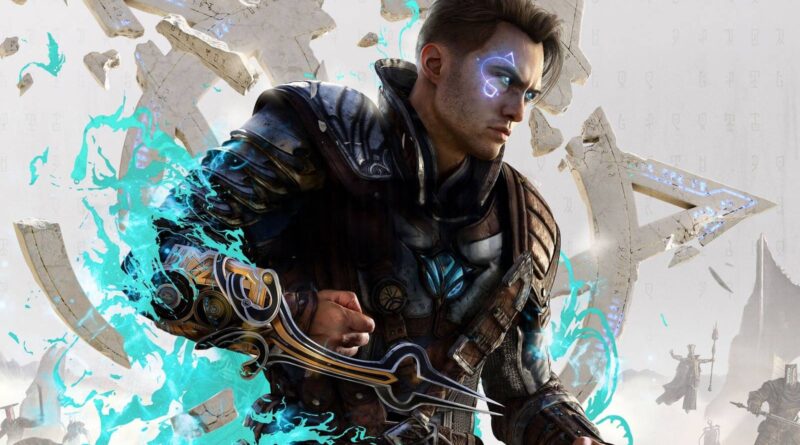
‘Immortals of Aveum’ (2023)

When it comes to first-person shooter games, most of them feature firearms. It’s sort of implied by the term “shooter,” after all. Immortals of Aveum, however, takes a bit of an unorthodox approach, with magic being the primary weapon in lieu of guns. So you’re not so much “shooting” as you are casting spells. Semantics aside, the fast-paced fantasy combat is extremely rewarding, tight, and easy to get into.
The plot follows a war between the Kingdom of Rasham and Lucium, the last remaining realm to be free from Rasham’s invasions. Before long, and in the midst of the chaos, a young group of thieves has their hideout raided, getting them mixed up in something larger than they’ve ever dealt with before. Immortals of Aveum is a fantastic experience and an overlooked bit of fantasy that you’ll probably enjoy much more than you ever intended to.
‘Nobody Saves the World’ (2022)

The title Nobody Saves the World doesn’t mean the world is doomed: it literally means Nobody is saving it. Nobody is the name of the blank, expressionless character you play as, who is vaguely human-shaped but devoid of any defining features. He is basically just a white lump of clay with black, hollow eyes and a mouth. You begin the game not knowing who or where you are. A local rescues you and instructs you to find the wizard, who will surely know what’s going on. Instead, the wizard throws you in a dungeon, but accidentally leaves a wand that allows Nobody to shapeshift into 18 different forms.
This top-down RPG sees Nobody transforming into mice, robots, and even dragons as he does everything in his power to save this new world that he knows nothing about. The game bears a distinct sense of humor that feels almost satirical, almost like it took a page out of Terry Pratchett‘s Discworld novels. Its pixelated aesthetic is nostalgic, but it brings a new mechanic to an old formula that keeps it fresh and interesting. It’s so much fun to play, and there’s a surprising amount of content in it, too.
‘Thymesia’ (2022)

Thymesia is a Soulslike RPG where you play as Corvus, a faceless character who is always clad in his signature plague doctor mask. Corvus lives in the ruined Kingdom of Hermes, which previously relied on alchemy to solve its problems. Unfortunately, an alchemical experiment to contain a plague ended up mutating the people of Hermes into vile monsters. Corvus, one of the few left standing, has amnesia but knows he must find the source of the plague and the origin of his identity.
Thymesia is a little bit different from traditional Soulslikes. Instead of having the simple “attacks do damage” formula, attacks only really serve as a precursor. Each enemy has a true health bar and a standard health bar. Players must whittle down the standard health to stun enemies and land devastating strikes in order to do actual damage, or else the enemy’s health will just regenerate. Thus, you really have to be aggressive rather than relying on evasion. It’s a bit frustrating to get into (as Soulslikes tend to be), but it’s very atmospheric and tons of fun.
‘The Last Faith’ (2023)

The Last Faith is a Metroidvania game that got kind of swept under the current in the wake of so many similar games coming out. There’s honestly a reason for that: it isn’t as good as the likes of Hollow Knight or Blasphemous, but it’s still an exceptionally well-done game with highly engaging gameplay, despite some shortcomings.
The game is inspired by the likes of Castlevania (a game that inspired the entire Metroidvania genre), meaning it draws elements from Gothic horror like vampires and werewolves. Players have the option of choosing from a variety of weapons, including firearms and blades, as they embark upon what the game describes as a “journey to salvation.” The bosses in this game are really something else, and the gameplay is challenging and entertaining, even if it doesn’t really add too many new mechanics to the formula.
‘Concrete Genie’ (2019)

Concrete Genie is a PlayStation 4 exclusive adventure game set in the seaside town of Denska. Denska has recently been drained of most colour and light following a catastrophic oil spill nearby, which unleashes an amorphous force called the Darkness. In this city, an aspiring young artist named Ash travels to the town’s lighthouse to escape a group of bullies, where he finds a magical paintbrush that might be comically oversized but allows his drawings to come to life.
The game isn’t very combat-heavy, instead allowing players to solve puzzles and traverse the environment by painting “genies,” colourful spirits who will aid Ash on his journey. Still, you can also paint whatever your heart desires, either as a way of livening things up, or as a way of actually progressing. This game emphasizes the importance of art and individuality, and is limited only by the player’s imagination. It’s a highly underrated masterpiece from start to finish.
‘Bleak Faith: Forsaken’ (2023)

Bleak Faith: Forsaken is a fantasy Soulslike RPG that most people probably haven’t heard of. It’s actually an indie game, but you wouldn’t know it because it looks pretty incredible. This game is more of a science-fantasy: there are certainly elements of sci-fi, but there is also magic, with the combat featuring the swords-and-sorcery style fighting that Soulslike RPGs tend to favor.
This game follows a nameless protagonist stuck inside a colossal megastructure called the Omnistructure. The Omnistructure is constantly growing, to the point that it basically encompasses all of the known world. The game does not reveal why the Omnistructure was created in the first place, or why it is seemingly abandoned. Bleak Faith: Forsaken isn’t a perfect Soulslike experience, and it doesn’t really add any interesting mechanics to the formula, but it has an unparalleled atmosphere and an enthralling mystery, which makes it well worth playing.
‘Anodyne’ (2013)

Anodyne is a top-down RPG reminiscent of similar ’90s games, except Anodyne is completely self-aware. It has fourth-wall-breaking knowledge, meaning it makes several references to the fact that every character knows they are in a video game; fitting for a satire piece. Namely, it’s a meta take on classic top-down RPGs and the concept of a chosen one.
Right off the bat, you start as a nameless nobody who is supposed to be the chosen hero. Instead of a sword, he wields a broom as a weapon, which other characters find pathetic. Throughout your journey, you will encounter areas that swap the game’s base mechanics for new, exclusive features, often turning things on their head. Ultimately, Anodyne feels like an amalgamation of previous games, a Frankenstein’s monster of familiar assets and nostalgic references, but that’s okay because that’s what it’s supposed to be. Since its release, it has become quite the cult classic, which is why you should definitely check it out.
‘The Thaumaturge’ (2024)

The Thaumaturge is a low fantasy game set in the city of Warsaw in the year 1905, still under the rule of the Russian Empire. Rather than being an open-world RPG, the game is instead divided into more linear chapters, but that’s totally okay since the setup feels carefully constructed and jam-packed with side content. The story follows a detective who is a Thaumaturge, a being with supernatural and magical abilities, who has returned to his hometown in order to investigate the mysterious death of his father.
The game boasts turn-based combat similar to early Final Fantasy titles, but not too similar. Many historical figures of the Russian Revolution actually make an appearance in this game, too, adding a layer of realism to a totally fictitious story. It’s original, enjoyable, and there’s nothing else like it. If you’re interested, maybe stick to consoles, as the PC version is riddled with bugs and received subpar reviews in comparison to the console version.