
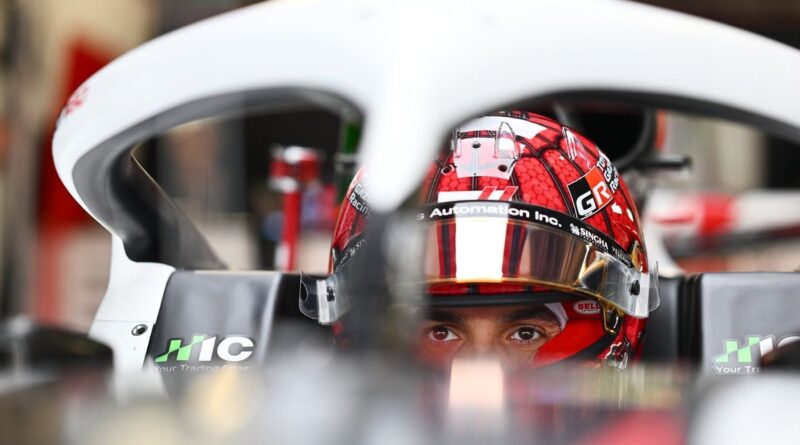
Fans don’t get a true picture of driver performance with 2026 F1 rules – but it’s fixable, says Haas boss
Technical changes implemented ahead of this year’s Miami Grand Prix mollified some of the complaints about Formula 1’s new format, but these have resurfaced after two successive events at ‘energy-starved’ venues.
A key question is whether the many layers of technology are harming the spectacle by interfering with the work of the drivers, and muddying the picture for fans.
Although reservations about the consequences of shifting to a formula with a near-50:50 split between electrical deployment and internal combustion engine power aren’t new, fresh concerns emerged during the British and Belgian GP weekends about speed differences between drivers in identical machinery. The nature of the Silverstone and Spa-Francorchamps tracks had the effect of amplifying the technical consequences of small differences in driving technique.
Fractional differences in throttle position, for instance, equated to multiple tenths of a second in overall lap time because some drivers had less deployment in the longer straights. This has naturally led to deeper conversations about where and how drivers should adapt, and whether the effect of software intervention in the application of power is transparent enough to spectators.
The pre-Miami changes to how much energy could be harvested and deployed around the lap represented as much as could be accomplished with the current hardware, so real change will be more gradual.

Ayao Komatsu, Haas F1 Team
Photo by: Guido De Bortoli / LAT Images via Getty Images
“Honestly, I think we’re trying to simplify the sport,” Haas team boss Ayao Komatsu told media including Motorsport.com in Hungary. “I think currently it’s just too complicated.
“Like a tiny detail of the driver operation difference that have either unintended or secondary consequences is, I think, something we all identified the need to avoid and improve as a sport. You know, to bring the control back to the driver.
“And also just to simplify for everyone. I think it’s very important everyone understands the sport, regardless of what your interests are. And then to be able to do that, I think the sport has to be a bit more simplified.”
While the headlines have been dominated by events at the sharp edge of the championship battle, where Mercedes’ George Russell was initially baffled by the difference in top speed between himself and team-mate Kimi Antonelli, peculiar disparities in electrical deployment are a fact of life throughout the grid. Software glitches have been cited as a key contributory factor to Russell’s woes, but this has added urgency to the question of how much of a role the driver now plays.
Fascinating differences in opinion have emerged between the drivers themselves. There are those who lament the interference of the software in their ability to control the car; others, meanwhile, point out that the scenario is the same for everyone, so the better drivers will be those who adapt.
But if such a large speed differential can be triggered by a fractional difference in throttle position or brake application earlier in the lap, is it fair to characterise this as a shortcoming or a mistake? And how are the trackside spectators and TV viewers to know, when the contributing factors aren’t always immediately visible even in data?

Lando Norris is one driver who says the best drivers will adapt to the ruleset in front of them
Photo by: Andy Hone/ LAT Images via Getty Images
“I wouldn’t call it driver error as such,” said Komatsu. “Because again, for you to call it a a driver error, you have to expect the driver to understand every single detail of the strategy or software, how it’s calculated. You cannot expect that from a driver, right?
“So for me, still, drivers need to be able to drive instinctively to get to the limit of the grip, especially in qualifying. Pick up the throttle as soon as possible where he feels it’s not going to break traction, for instance – that’s the sport, isn’t it?
“Honestly, I can’t remember exactly why the staircase [the mandatory ramp-down of electrical input as charge diminishes] happened in qualifying, comparing Esteban [Ocon] and Ollie [Bearman], but the trigger is such a small difference. And the consequence is too big… the fans cannot understand, looking from the laptime difference, has he actually done a bad job?
“Or has he just done something on the deployment that he lost two tenths, three tenths? What is the real gap?
“So we will get there, but at the moment it’s just very complicated still.”
While the pre-Miami changes represented the latest in what has been a succession of sticking-plaster solutions to the problems inherent in the current hardware, that picture will shift from next year as F1 adopts a progressive move towards reducing the importance of electrical input. From 2027, the internal combustion engine will contribute more of the power, the electrical input will be reduced, and the amount of power which can be harvested through the lap will increase slightly.
For 2028, the ratio of internal combustion engine to electrical power will move to 60/40 and proposals are on the table to adopt a much smaller hybrid component for the next generation of cars, due in 2031.
“Look, we improved our regulation from Miami onwards,” said Komatsu. “That’s definitely a step better. But then we all knew that that’s not the final solution, because we had to balance it. We didn’t want to put everything upside down.
“So we have to make a step, let’s say, gradual improvement, so next year it’s going to be better again.
“At some point I’m sure we will solve it.”
Photos from Hungarian GP – Friday
We want your opinion!
What would you like to see on Motorsport.com?
– The Motorsport.com Team