
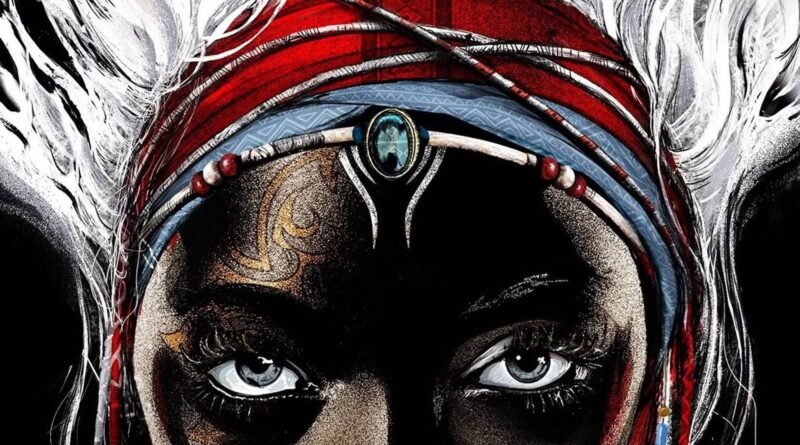
10 Fantasy Books That Hooked Me from the Opening Chapter
I’ve read quite a few fantasy books in my time — being a writer, reading sort of goes hand-in-hand with the profession. I’m always on the hunt for new series to read, as if I didn’t already have myself a backlog large enough to last me the next four decades or so. I’m not the type of impatient reader who needs to be hooked right away; I understand that it takes time to get into things. But hey, I’m not opposed to cracking open a fresh book and getting invested from the first page.
There have been quite a few fantasy books that have done exactly this. Usually, it’s a case of me hearing about them online or finding a cool-looking or acclaimed book in my local Indigo, only for it to blow me away by the time I’d even finished the first chapter. These are the best fantasy novels that had me fully invested, hook, line, and sinker, from the very first chapter.
‘The Anvil of the World’ (2003)

Okay, so if you really want to be pedantic about it, The Anvil of the World doesn’t technically have “chapters” in a traditional sense. The book is split into three distinct parts, though none of these parts have subtitles or are marked as such. The first part is approximately 80 pages long and is the shortest of the book by far. That said, it’s still an incredible ride that got me hooked pretty much right away.
I picked up this diamond in the rough at a cheap book sale for less than $1 CAD. I read it shortly afterwards for my high school book report, but I’ve read it several times since, because it’s just that good. The opening is about a smuggler named Smith who is assigned to escort Lord Ermenwyr to a seaside city via caravan, which is basically a train. The adventure, worldbuilding, and humor are so unlike anything I’d ever read before that it was hard not to get rapt up in it right from the get-go.
‘The Last Wish’ (1992)

Again, if you really want to be granular about things, The Last Wish doesn’t technically have chapters either. Instead, it’s a short story collection, meaning it’s divided into individual tales rather than following a distinct, beginning-to-end narrative broken up by chapters. Each story follows Geralt of Rivia, a monster hunter known as a Witcher, as he takes on different contracts to slay or eradicate various beasts and beings from mythology.
The first story in the book, known simply as The Witcher (which is, incidentally, what the entire series came to be called), follows Geralt as he is assigned to lift a curse from a princess, who turns into a murderous werewolf called a Striga (which originates in Slavic folklore) every night. It might have a simplistic plot, but Geralt is quickly established as such a fascinating character that it definitely left me wanting to know more about him and his past. The vibe felt singular too — it didn’t feel like a fairy tale. It develops a miserable and morbid world straight away, so I knew I was in for something different with this one.
‘Harry Potter and the Philosopher’s Stone’ (1997)

I grew up during the height of Pottermania, which was exploding in popularity in the early 2000s. My older sister was really into Harry Potter and shared the movies with me as I grew up. I had a somewhat advanced grasp of reading for my young age, and decided to give the first book a go when I was around six or seven. It was my first proper fantasy novel, and I think it’s responsible for my introduction to the genre as a whole. Looking back on it as an adult, Potter is certainly not the best fantasy book out there, but it does have an uncanny ability to hit the ground running, so to speak.
The first chapter opens with an iconic line about the Dursley family and their commitment to being normal. From there on, the story of the Boy Who Lived is told through the eyes of his surviving aunt and uncle, who are non-magical, and begin hearing whispers of the Potters’ deaths and how Harry survived the killing curse and defeated Lord Voldemort, despite being just a baby. It’s an unconventional choice, not opening up with the protagonist himself, but rather presenting his backstory in a palatable way without resorting to a massive info dump (something that Rowling struggled with in the closing acts of the rest of the series).
COLLIDERInteractive
The Hat awaits
Movies/Wizarding World/The Sorting
‘Children of Blood and Bone’ (2018)

Children of Blood and Bone may be a YA book, but it excelled in a lot of interesting ways. For starters, it borrows from author Tomi Adeyemi‘s Nigerian heritage, featuring a vast and expansive world inspired by West Africa. It was once a world full of magic, but it has since been taken away, its use outlawed by an oppressive empire. Society is segregated into former magic users, who are often subject to poverty, and the dominant non-magical population.
I think the worldbuilding is the primary reason I got so hooked in the first place. Worldbuilding is an important piece of any fantasy story, and it’s something that I absolutely love. Presenting me with a world unlike anything I had ever read about in the first few pages definitely got my attention. Some capital F fantasy fanatics might deem this novel to be juvenile or basic or what have you, but I say it got popular for a reason, and is a phenomenal effort with some sublime political messaging behind it.
‘The Eye of the World’ (1990)

The Wheel of Time series is quite a massive undertaking, featuring 14 main novels (each at least 600 pages long) and one prequel novel. The Eye of the World is the first book in the series, and it opens on a high note, with an introductory paragraph that becomes all too familiar as the series goes on. It describes how the Wheel of Time turns, and ages come and go, before talking about the wind and where it is blowing, which varies in every book.
The first chapter presents the main protagonist, Rand al’Thor, and the rural region of the Two Rivers. Yet, the darkness falls remarkably quickly, with Rand spying a Myrddraal while out with his father. The Myrddraal stalks them for a while before mysteriously disappearing, instantly setting up a sense of foreboding that something is going to go terribly wrong. Honestly, other authors should take notes, because this is how to start your story off right.
‘The Hobbit, or There and Back Again’ (1937)

The opening lines of The Hobbit are some of the most acclaimed words in literary history. Most people have probably heard them before: “In a hole in the ground, there lived a hobbit. Not a nasty, dirty, wet hole filled with the ends of worms and an oozy smell, nor yet a dry, bare, sandy hole with nothing in it to sit down on or to eat: it was a hobbit hole, and that means comfort.” J. R. R. Tolkien really knew how to set the mood with his debut novel, famously writing these words on one of his students’ blank exam papers during a late-night grading session.
The first chapter establishes the quest and premise of the book as well as the main characters, all through the lens of an impromptu party at the hobbit’s home, filled with song, good food, drink, and one very pissed-off halfling, who was not informed that a party would be occurring at his house. It’s humorous, but also innocent and almost fairytale-esque. Moreover, it owes to Tolkien’s classic tone, which sounds like a father telling a bedtime story to his kids. Incidentally, that was how most of his stories came to be, so it makes sense.
‘The Name of the Wind’ (2007)

It’s honestly kind of a travesty that Patrick Rothfuss will likely never finish The Kingkiller Chronicle, because it’s such an interesting and intriguing story. The Name of the Wind is the first book in the series, which opens on a grim yet fascinating note. It establishes the main protagonist and lets the reader know that Kote is most likely going to be dead by the time the story is finished. He runs an inn, living a simple life, but his inner thoughts hint at knowing a great deal more than the average innkeeper.
This opening sequence feels much shorter than it actually is because it successfully keeps the reader hanging on every word. I was quite interested in this “Kote,” and immediately wanted to know who he was, what he knew about the world, and why he seemed to be waiting for his demise. This is basically a masterclass in setting the tone and creating a world full of mysteries before the audience has the chance to grow bored.
‘A Game of Thrones’ (1996)

A Game of Thrones opens up with a prologue sequence narrated by a Night’s Watchman named Will. He describes an expedition beyond the Wall, where he and his two companions encounter a village full of dead wildlings. To their horror, the corpses begin to stand up. Fleeing into the Haunted Forest, they come face-to-face with the Others, icy-cold phantoms that can raise the dead. They have not been seen for centuries, so the men are initially skeptical, but once they see them in person, the fear becomes very real. The prologue leaves their fates temporarily ambiguous, refusing to explain what befell Will until later.
Admittedly, at the time I read A Game of Thrones, I had stopped reading for some reason. This was the book that actually got me back into reading, and I wouldn’t have had it any other way. This prologue sets up a chilling mystery (pun intended) at the core of the story, long before introducing the main characters. Seriously, Will is just a one-off throwaway, yet a major plot point is revealed through his eyes, and he feels incredibly fleshed-out personality-wise. Truth be told, I think this prologue sequence could make anyone pick up reading as a hobby.
‘Prince of Thorns’ (2011)

Prince of Thorns begins with a 14-year-old named Jorg Ancrath, who is, to put it nicely, not the most morally sound. In fact, he’s morally repulsive, vulgar, cruel, insensitive, violent, narcissistic, and completely devoid of empathy. Yet, for some unknowable reason, I found it hard to put the book down. Even though Jorg is certainly not someone you’re supposed to like or would want to know in real life, reading about him is endlessly fascinating.
The entire Broken Empire trilogy is like one big character study into a traumatized, depraved individual. In fact, Jorg basically describes himself as a sociopath. He kills one of his mercenaries in the opening chapter as he raids a village and steals their beer as a birthday celebration. I knew going in that I wasn’t going to like Jorg as a person, but that I was going to love reading about him and his chaotic antics.
‘The Way of Kings’ (2010)

The Way of Kings is part of Brandon Sanderson‘s Cosmere universe, being the opening novel of The Stormlight Archive series. At the time, I had only heard about the series via word of mouth — I didn’t even really know what the Cosmere was. Little did I know that I would be going home one day with the first two books in what would quickly become my favorite literary series of all time.
Aside from the prelude to the first arc of the series, the prologue of the book opens up with the iconic line, “Szeth-son-son-Vallano, Truthless of Shinovar, wore white on the day he was to kill a king.” Now that’s how you set the mood! The prologue features a high-octane political assassination full of action, a tiny bit of worldbuilding, and even a minor plot twist that lets you know just what you’re in for. I’ve read this book a few times now, and its opening chapter never gets old and never fails to make me excited for what’s to come, even though I already know it at this point.