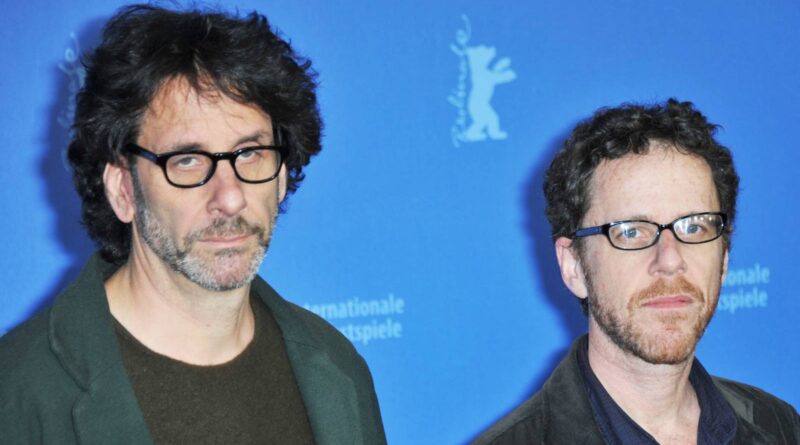
Of all the filmmaking duos, from Avengers: Doomsday directors, the Russosto the Safdies, there are none better than the Coens, Ethan and Joel. The most influential filmmaking partnership in cinema history, the pair have produced, written, and directed a total of 18 feature films, winning four Academy Awards in the process. Fargo marked the pair’s first Oscar success in the Best Original Screenplay category, but it was No Country for Old Men that proved the most fruitful, winning Best Picture, Best Director, and Best Adapted Screenplay.
Alas, it has now been eight years since theatergoers have been treated to a joint project by the Coens. Not since The Ballad of Buster Scruggs, an anthology of six shorts that take place within the American Wild West, have the pair linked up on a film, instead choosing to make separate projects alongside their respective wives. Recently, rumors have swirled suggesting the two are finally getting back together, with a script supposedly ready and waiting to thrust them back in the spotlight as a duo.
At Lyon’s Lumière Film Festival, Joel and Ethan gave fans the biggest update in many years, teasing that another Coen film could be on the horizon. “We haven’t discussed it in terms of plot or narrative or what kind of movie. But we’ve discussed going back because there are certain crew people we missed,” Ethan said in reference to Minneapolis, their hometown and the place they famously shot Fargo. Joel added:
“Yes, there are a couple of other stories that we’ve thought about that would take place in Minneapolis, which is where we come from. So we’ll see if they haven’t sort of germinated to the point where we would go, you know, that’s what we’re going to do next, or we’re even going to definitely do.”
Collider Exclusive · Oscar Best Picture Quiz Which Oscar Best Picture Is Your Perfect Movie? Parasite · Everything Everywhere · Oppenheimer · Birdman · No Country
Five Oscar Best Picture winners. Five completely different visions of what cinema can be — and what it can do to you. One of them is the film that was made for the way your mind works. Ten questions will figure out which one.
🪜Parasite
🌀Everything Everywhere
☢️Oppenheimer
🐦Birdman
🪙No Country for Old Men
01
What kind of film experience do you actually want? The best movies don’t just entertain — they leave something behind.
02
Which idea grabs you most in a film? Great films are driven by a central obsession. What’s yours?
03
How do you like your story told? Form is content. The way a story is shaped changes what it means.
04
What makes a truly great antagonist? The opposition defines the protagonist. What kind of opposition fascinates you?
05
What do you want from a film’s ending? The final note is the one that lingers. What do you want it to sound like?
06
Which setting pulls you in most? Where a film takes place shapes everything — mood, stakes, what’s even possible.
07
What cinematic craft impresses you most? Every great film has a signature — a technical or artistic element that makes it unmistakable.
08
What kind of main character do you root for? The protagonist is the lens. Who you choose to follow says something about you.
09
How do you feel about a film that takes its time? Pace is a choice. Some films sprint; others let tension accumulate slowly, deliberately.
10
What do you want to feel walking out of the cinema? The best films leave a mark. What kind of mark do you want?
The Academy Has Decided Your Perfect Film Is…
Your answers have pointed to one Oscar Best Picture winner above all others. This is the film that was made for the way your mind works.
Parasite
You are drawn to films that operate on multiple levels simultaneously — that begin in one genre and quietly, brilliantly migrate into another. Bong Joon-ho’s Parasite is a film about class, desire, and the architecture of inequality that manages to be darkly funny, deeply suspenseful, and genuinely shocking across a single extraordinary running time. Your instinct is for cinema that hides its true intentions until the moment it’s ready to reveal them. Parasite is exactly that — a film that rewards close attention and punishes assumptions, right up to its devastating final image.
Everything Everywhere All at Once
You want it all — and this film gives you all of it. The Daniels’ Everything Everywhere All at Once is one of the most maximalist films ever made: action comedy, multiverse sci-fi, family drama, existential crisis, and a genuinely earned emotional core that sneaks up on you amid the chaos. You are someone who responds to ambition, who doesn’t want cinema to choose between being entertaining and being meaningful. This film refuses that choice entirely. It is overwhelming by design, and its overwhelming nature is precisely the point — because the feeling of being crushed by infinite possibility is exactly what it’s about.
Oppenheimer
You are drawn to cinema on a grand scale — films that understand history not as a backdrop but as a force, and that place their characters inside that force and watch what happens. Christopher Nolan’s Oppenheimer is a film about the terrifying gap between what we can do and what we should do, told with the full weight of one of the most consequential moments in human history behind it. You want your films to feel important without feeling self-important — to earn their ambition through sheer craft and the gravity of their subject. Oppenheimer does exactly that. It is enormous, complicated, and refuses easy comfort.
Birdman
You are drawn to films that foreground their own construction — that make the how of the filmmaking part of the what it’s about. Alejandro González Iñárritu’s Birdman, shot to appear as a single continuous take, is cinema examining itself through the cracked mirror of a fading actor’s ego. You respond to formal daring, to the feeling that a film is doing something that probably shouldn’t be possible. Michael Keaton’s performance and Emmanuel Lubezki’s restless camera create something genuinely unlike anything else — a film that is simultaneously about creativity, relevance, self-destruction, and the impossibility of ever truly knowing if your work means anything at all.
No Country for Old Men
You are drawn to cinema that trusts silence, that refuses to explain itself, and that treats dread as a form of meaning. The Coen Brothers’ No Country for Old Men is a film about the arrival of a new kind of evil — implacable, arbitrary, and utterly indifferent to the moral frameworks we use to make sense of the world. It is one of the most formally controlled films ever made, and its controlled restraint is what makes it so terrifying. You want your films to haunt you, not comfort you. You are not interested in resolution if resolution would be dishonest. No Country for Old Men is honest in a way that most cinema never dares to be.
What Could the Next Coen Brothers Film Look Like?
In the same conversation, the Coens teased what their next movie might look like, admitting that they have never stopped working on scripts, and that factors out of their control have interrupted. “We’ve written a lot of scripts that we’ve never made,” Ethan said, adding, “One of the Minneapolis stories we were talking about had a main part intended for an actor who has since died. So we’re thinking, well, we’re not sure that’s going to work. That’s a consequence of aging.” But don’t expect an on-the-nose political commentary from the pair anytime soon, with Ethan saying:
“We don’t really think of any of our movies as commenting on America currently, or commenting on anything outside the story itself. Audiences are entitled to take our movies any way they want. Making those comparisons may be totally appropriate for an audience, but we literally don’t think about it that way.”