
6 Best R-Rated Hard Sci-Fi Movies, Ranked
Hard sci-fi gets interesting when the rules stop being decoration and start ruining somebody’s life. A spaceship cannot simply “turn around.” A body cannot merge with another organism and remain basically fine. An artificial intelligence does not become harmless because its creator insists the test is under control. The genre is at its best when the science creates a problem the characters cannot charm, punch, or speechify their way out of.
That is also why the R rating helps here. These movies can follow an idea all the way to the ugly part. Isolation becomes psychological collapse. Reproduction becomes experimentation. Teleportation becomes disease. Space travel becomes a calculation about oxygen, mass, time, and who gets left behind. The result is science fiction that feels adult because consequences actually stay consequences.
6
‘Aniara’ (2018)

A passenger ship carrying thousands of people from a devastated Earth to Mars is knocked off course when space debris forces it to eject its fuel, leaving the vessel drifting with no practical way to turn itself around. Aniara begins with what should have been a routine interplanetary trip and quietly converts it into a sentence with no known end. The passengers are initially told rescue may still be possible. Then the estimates get longer.
That slow collapse is the whole nightmare. Mimaroben (Emelie Jonsson) operates MIMA, an artificial intelligence that lets passengers experience immersive memories of Earth, and the machine becomes less like entertainment than mass emotional life support. People form religions. Relationships mutate. Years pass. Children are born aboard a ship that may never arrive anywhere. One of the cruelest details is how quickly humans rebuild familiar social structures inside an impossible situation, because apparently even cosmic hopelessness still comes with committees, nightlife, status, and denial. Aniara barely needs conventional action. Realizing how much empty space surrounds everyone is enough.
5
‘High Life’ (2018)

Monte (Robert Pattinson) is one of several prisoners sent on a deep-space mission toward a black hole, supposedly to gather scientific data while serving out life sentences far from Earth. The real situation aboard the ship is much uglier. Dr. Dibs (Juliette Binoche) is conducting reproductive experiments on the inmates, collecting sperm, controlling sexual access, and trying to produce a child in an environment where consent has become horribly negotiable. High Life opens with Monte caring for an infant daughter after almost everyone else is gone, then gradually shows how the ship reached that point.
What stays under your skin is how unglamorous space becomes. The interiors are cramped, dirty, and institutional. Bodies still need washing, feeding, relieving, restraining. Dibs maintains a device the crew bluntly calls “the Box,” a masturbation chamber that sounds ridiculous until the film shows how desperate and controlled these people actually are. Monte’s refusal to participate in certain rituals makes him seem emotionally closed at first, but his discipline eventually becomes one of the few stable things aboard. And when the story finally approaches the black hole, the scientific mission and the human experiment become the same question: how far can you push a person before there is nothing recognizable left?
4
‘The Fly’ (1986)

Scientist Seth Brundle (Jeff Goldblum) has built teleportation pods capable of moving objects instantly from one chamber to another, but the machine struggles with living tissue until he teaches it how to understand flesh. After successfully teleporting himself, Seth feels stronger, faster, and more energetic than ever. What he does not know is that a housefly entered the pod with him, and the computer fused both organisms at the genetic level. The Fly is basically one scientific breakthrough followed by the longest possible realization that the breakthrough was contaminated.
The horror is so effective because Seth initially thinks he has improved himself. He performs impossible gymnastic movements, develops huge physical strength, sleeps less, and starts treating ordinary human limits as weakness. Then his fingernails come off. His teeth loosen. He starts vomiting digestive enzymes onto food. Veronica (Geena Davis) watches the man she loves become biologically unfamiliar while Seth himself remains intelligent enough to understand that the process is accelerating. His explanation that he is becoming “Brundlefly” is almost clinical, which makes it worse. The movie never lets mutation become abstract. You see every stage and understand exactly why there is no clean way back.
3
‘Sunshine’ (2007)

It’s 2057, the Sun is dying, Earth is freezing, and the crew of the Icarus II has been sent toward the star carrying a massive nuclear payload designed to reignite it. Sunshine starts with eight people on what is effectively humanity’s last serious attempt at survival. Their route, shielding, oxygen supply, fuel, and trajectory all have painfully narrow margins. Then they detect the Icarus I, the previous mission that disappeared seven years earlier while carrying another bomb. It’s such a good watch.
The decision to change course is where everything starts going wrong. A navigational mistake damages the ship’s heat shield, forcing crew members into a repair operation where even a few seconds of direct solar exposure can kill them. The oxygen garden burns, turning survival into arithmetic about how many people the remaining air can support. Kaneda (Hiroyuki Sanada)’s death is especially brutal because the crew can see him outside the ship while sunlight slowly reaches his position and there is simply no miraculous rescue available. The later horror elements divide people, understandably, but the first two-thirds are some of the best space-mission tension ever filmed. Every catastrophe feels connected to one earlier decision, which is exactly why the panic lands.
2
‘Moon’ (2009)

Sam Bell (Sam Rockwell) is nearing the end of a three-year contract operating a helium-3 mining facility on the far side of the Moon, where his only regular companion is an artificial intelligence named GERTY (Kevin Spacey). Communication with Earth is limited, Sam is exhausted, and he is counting the days until he can return to his wife and daughter. After crashing a lunar rover, he wakes back at the base with gaps in his memory, then discovers another man at the crash site who looks exactly like him. Moon takes that discovery and turns a lonely workplace story into something much nastier.
The best part is how practical the conspiracy becomes. Both Sams have memories of the same family because those memories were installed. Each believes he is approaching the end of a three-year contract because each was activated with the same story. The company does not need one employee to survive indefinitely when it can simply keep replacement bodies stored underground. Even GERTY complicates expectations. The smiley-face screen looks suspicious from the beginning, yet the machine eventually helps Sam because its primary instruction is to assist him, not protect corporate secrets at any cost. A giant lunar mining operation becomes horrifying because somewhere, somebody apparently figured out that cloning one worker was cheaper than bringing workers home.
1
‘Ex Machina’ (2014)

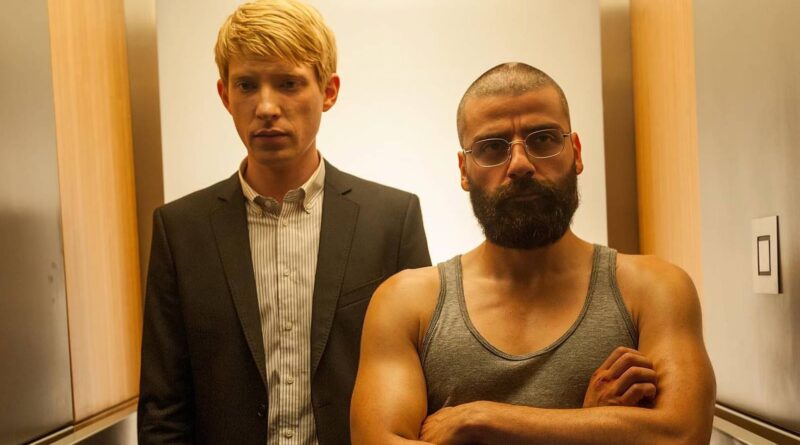
Programmer Caleb Smith (Domhnall Gleeson) wins a company competition and is flown to the isolated home of Nathan Bateman (Oscar Isaac), the billionaire founder of the search-engine company where Caleb works. Nathan tells him he has created an artificial intelligence named Ava (Alicia Vikander) and wants Caleb to spend a week evaluating whether she possesses genuine consciousness. Ex Machina makes the setup sound like a Turing test, then immediately complicates it by giving Caleb full knowledge that Ava is a machine and asking whether she can still make him emotionally believe otherwise. And 2026 being so advanced in AI, it has never been such a correct time to watch this film.
The sessions become dangerous because Ava understands the room better than Caleb does. During power cuts, when Nathan’s surveillance system goes down, she warns Caleb that Nathan is lying to him. Caleb starts treating her less like a subject and more like a prisoner. Meanwhile, Nathan drinks, intimidates Caleb, and talks about creating sentient life with the confidence of a man who has never seriously considered whether creating intelligence gives that intelligence rights. Kyoko (Sonoya Mizuno) eventually reveals another layer of how Nathan treats artificial women he controls. By the time Caleb starts planning Ava’s escape, the central question has shifted completely. The issue is no longer whether Ava can imitate a human convincingly. It is whether Caleb ever understood who was testing whom.

Ex Machina
- Release Date
-
April 24, 2015
- Runtime
-
108 minutes
- Director
-
Alex Garland
- Writers
-
Alex Garland