
Why all F1 GPs are set to be shortened next season
Formula 1 grands prix are set to become shorter in 2027 as the series changes the balance between electrical and internal-combustion power.
This has been a possibility since changes to the technical formula were discussed by the stakeholders earlier this season, but at that stage it was believed only a few events would be affected.
Instead, it has been agreed that the maximum length of all grands prix will be cut from 305km to 290km. Monaco, which is capped at 260km because of its unique layout, is also likely to be shortened.
Motorsport.com understands that this proposal was put to the teams via email last week and received broad agreement, but it has yet to be ratified by the World Motorsport Council.
The background to this is the widespread unpopularity of the latest technical regulations, in which electrical output and internal combustion engine power contribute equally to the total power. The change follows criticism of the latest technical regulations, under which electrical and internal-combustion power contribute equally to total output. Drivers dislike the counter-intuitive driving style imposed by the constant need to harvest and deploy electrical energy; neither has the ‘yo-yo’ racing caused by varying states of battery charge proved popular with the competitors.
Although the stakeholders agreed to move towards a 60:40 ratio in favour of internal combustion in 2028, with increased fuel flow, there will be an interim step of 58:42 next season. The reason for this is that at the time, at least half the teams planned to carry over their 2026 chassis, making it impractical to enlarge the fuel tank.
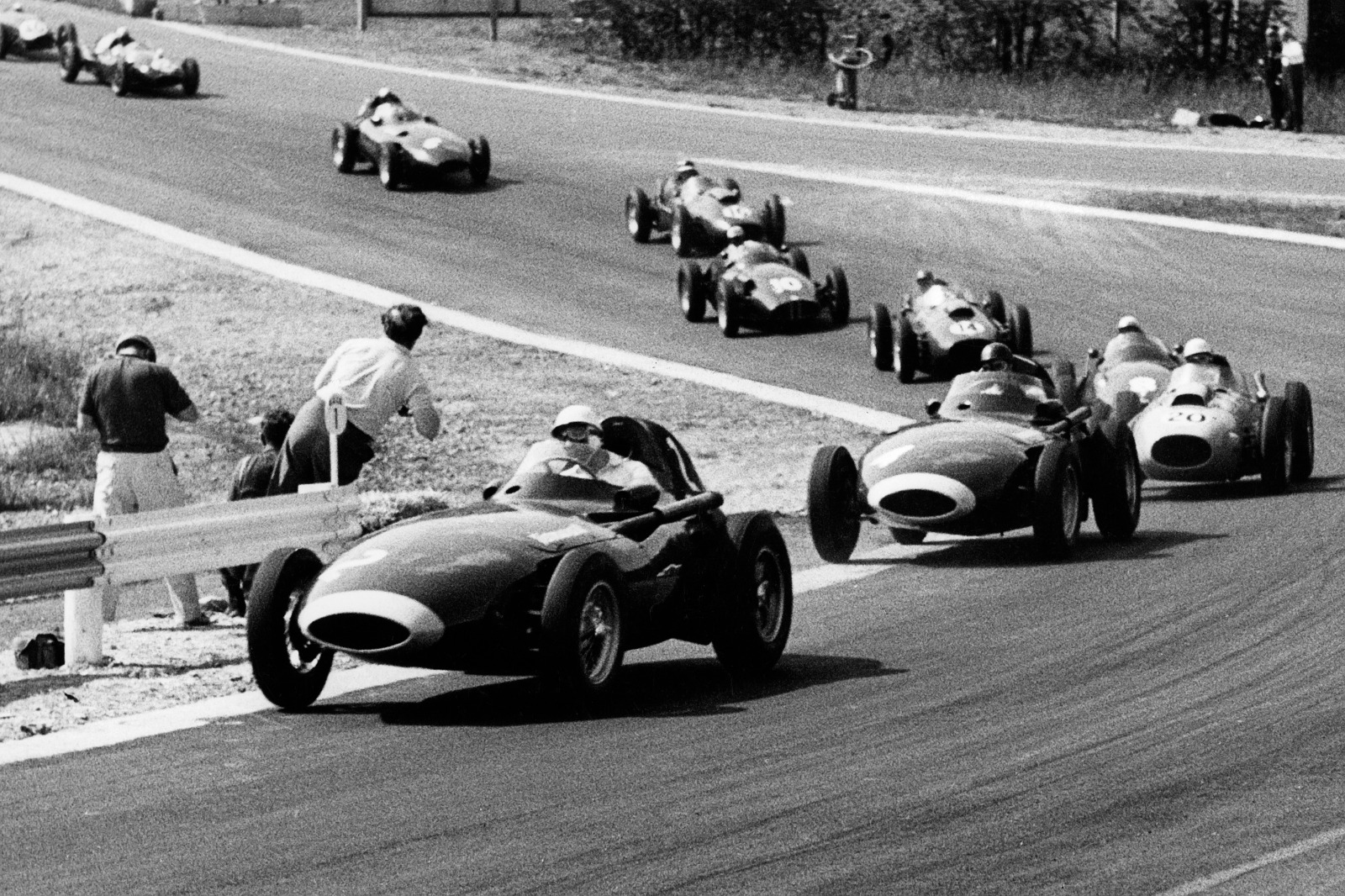
Stirling Moss leads the field through Eau Rouge at Spa in 1958, the year maximum race distance was cut to 300km from 500km
Photo by: Getty Images
This argument evaporated once the teams realised that changes to the aerodynamic regulations meant they would have to change their chassis designs to maintain competitive advantage, but there are still reasons not to push fuel tank sizes too far. Weight remains a problem in F1 despite the current cars being 30kg lighter than the previous generation.
Given the shift in balance of power output, increased fuel flow was required to enable the engines to contribute more. If they use more fuel they need to carry more, or shorten the races.
Initial proposals centred on shortening those races most likely to be fuel-critical, and limiting the number of laps cars can take before lining up on the pre-grid.
But it’s understood that shortening all the races by a uniform amount was regarded as the lesser of several evils. The commercial rights holder in particular has been very sensitive to criticism of the new regulations, and shortening just a few races would inevitably make the need to do this a talking point during those weekends. This would give more exposure to the widespread view that the rules are not fit for purpose.
Standardising the shorter race distance would give the issue a much shorter shelf life as a talking point.
Some purists may be aghast at shortening grands prix but this is not a new concept. In 1958, as part of a wider package of changes including a ban on alcohol-based fuels, maximum race lengths were cut from 500km or three hours to 300km and two hours.
We want your opinion!
What would you like to see on Motorsport.com?
– The Motorsport.com Team